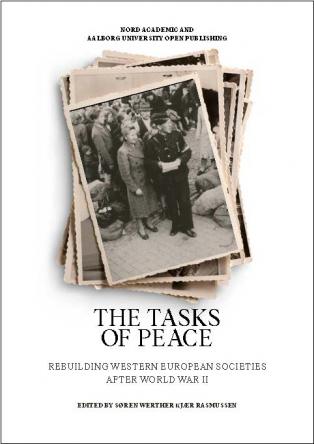
The Tasks of Peace: Rebuilding Western European Societies after World War II
-

This work is licensed under a Creative Commons Attribution 4.0 International License.
-
Details about the available publication format: Download PDF
Download PDF -

Editors
Keywords
World War II, Post-war, Democratisation, Resocialisation, Welfare, Veterans, Refugees
Abstract
In 1945, as the Second World War came to an end, social rebuilding began. Across Europe, societies faced urgent questions of justice, welfare, and democracy. Former collaborators had to be punished or reintegrated. Prisoners of war, refugees, and displaced persons required housing, education,and help with repatriation. Veterans, resistance fighters, and victims needed recognition, compensation, and support.
The Tasks of Peace examines the difficult transition from warfare to welfare in Western Europe after 1945. It shows how post-war reconstruction was not simply a return to normality, but a contested process in which states, resistance and veterans’ organisations, welfare institutions, and civil society sought to define and shape post-war society.
Drawing on case studies from Denmark, Finland, Italy, Britain, and Norway, the book explores how punishment, social assistance, democratic education, compensation, and institutional reform became part of the same struggle to secure peace and stability. It reveals how postwar welfare and democracy were shaped not only by political visions, but also by everyday administrative decisions about deservingness, danger, and belonging.
The book is written by an international group of scholars and edited by Søren Werther Kjær Rasmussen, PhD and postdoc at the University of Southern Denmark.
Published in collaboration between Aalborg University Open Publishing and Nord Academic / Gads Forlag.
Recommended citation:Rasmussen , S. W. K. (Ed.). (2026). The Tasks of Peace: Rebuilding Western European Societies after World War II. Aalborg University Open Publishing & Nord Academic/Gads Forlag. https://doi.org/10.54337/aau.tasksofpeace
Chapters
-
IntroThe Tasks of Peace Await
-
Chapter 1From Revenge to Probation Service: Convicted Wartime Collaborators in Denmark after World War II
-
Chapter 2The Braintree Experiment: Demonstrating the “British Way of Life” to German Prisoners of War in Post-War Britain
-
Chapter 3Adult Education in German Refugee Camps in Denmark following the Second World War: Study Circles and Democratic Learning
-
Chapter 4Teaching Democracy: Denazification and Democratisation among German Refugees in Denmark, 1945–1947
-
Chapter 5In the Absence of a Plan: The Rehabilitation of Non-German Displaced Persons in Denmark, 1945–1953
-
Chapter 6Sacrifice, Service and Reciprocity: The Moral Economy of Resettlement in Post-war Finland
-
Chapter 7From Hiding in Darkness to Entering the Spotlight: Finnish Military Deserters and Their Return to Post-War Society
-
Chapter 8From Criticism to Celebration: Intelligence Officers, Memory Wars, and the Recasting of Honour in Post-war Denmark
-
Chapter 9Compensation Policies for Danish Resistance Fighters and World War II Victims 1941–2026
-
Chapter 10Social Aid and Gender in Post-War Denmark: Women and the Practices of the Compensation Law, 1945–1948
-
Chapter 11Defining Veteran Status in Post-war Norway and Denmark 1945–1969
-
Chapter 12Entangled Transitions: Trade Unions, Welfare Institutions, and Social Conflict in Post-War Italy, 1943–1948
-
Chapter 13The “Two-Faced Janus” of Social Collaboration: The Consigli di Gestione in Italy between Corporatism and Industrial Democracy, 1943–1949
-
Notes
References
Intro: The Tasks of Peace Await
1 Democracy back in action: the first sitting of the Storting after liberation. (n.d.). https://www.stortinget.no/en/
In-English/About-the-Storting/historical-highlights/the-storting-during-world-war-ii/democracy-back-in-action-
the-first-sitting-of-the-storting-after-liberation/.
2 Henrik Lundtofte, ed., De udstødte, de uvelkomne og de beundrede: Danmark efter Befrielsen (Copenhagen: Nord
Academic, 2026).
3 Social-Demokraten (June 6, 1945).
4 See chapters 6–7 of this anthology.
5 See chapters 12–13 of this anthology.
6 Tony Judt, Postwar: A History of Europe Since 1945 (New York: Penguin Press, 2005); Herbert Obinger, Klaus Petersen,
and Peter Starke, Warfare and Welfare: Military Conflict and Welfare State Development in Western Countries
(Oxford: Oxford University Press, 2018).
7 Ibid.
8 “De Udstødte, De Uvelkomne Og De Beundrede. Resocialisering, Velfærd Og Demokratisering 1945-1950.” VELUX
og-demokratisering-1945.
9 Henrik Lundtofte, ed., De udstødte, de uvelkomne og de beundrede. Danmark efter Befrielsen (Copenhagen: Nord
Academic, 2026).
10 Søren Werther Kjær Rasmussen, “Conference Report: From Warfare to Welfare?,” H-Soz-Kult, February 13, 2026
11 Lundtofte, De udstødte, de uvelkomne og de beundrede, 14-28; Judt, Postwar, 31-50; Obinger, Petersen, and
Starke, Warfare and Welfare; Stefan-Ludwig Hoffmann, Peter Romijn, Sandrine Kott, and Olivier Wieviorka, eds.,
Seeking Peace in the Wake of War: Europe, 1943–1947 (Amsterdam: NIOD, 2015); Jolande Withuis and Annet
Mooij, eds., The Politics of War Trauma: The Aftermath of World War II in Eleven European Countries (Amsterdam:
Aksant, 2010).
12 Ibid.
13 Martin Conway, The Sorrows of Belgium: Liberation and Political Reconstruction, 1944–1947 (Oxford: Oxford University
Press, 2012). 1–5, 176–195, 283–317.
14 Søren Werther Kjær Rasmussen, “Conference Report: From Warfare to Welfare?”
15 For more on this subject see: Alan Malpass, British Character and the Treatment of German Prisoners of War,
1939–48 (Cham: Palgrave Macmillan, 2020); Dorte Kook Lyngholm and Henrik Lundtofte, “Vi maa ikke gøre dem
til en Pariakaste: Resocialisering af landsforræderdømte,” in De udstødte, de uvelkomne og de beundrede: Danmark
efter besættelsen, edited by Henrik Lundtofte (Copenhagen: Gads Forlag/Nord Academic, 2026), 32–61;
Anika Seemann,
The Quislings: The Trials of Norwegian Wartime Collaborators, 1941–1964 (Cambridge: Cambridge
University Press, 2024).
16 See chapters 3–6 of this anthology.
17 See chapters 9–10, 12–13 of this anthology.
18 See note 6.
Chapter 1: From Revenge to Probation Cervice: Convicted Wartime Collaborators in Denmark after
World War II
1 Jon Elster (ed.), Retribution and Reparation in the Transition to Democracy (Cambridge: Cambridge University
Press, 2006). Same: Closing the Books. Transitional Justice in Historical Perspective (Cambridge: Cambridge University
Press 2004). Hans Frederik Dahl: “Indledning: Oppgjøret som rystet Norge”, Hans Frederik Dahl og Øystein
Sørensen (ed.), Et rettferdig oppgjør? Rettsoppgjøret i Norge etter 1945 (Oslo: Pax Forlag, 2004), 9–29. Ditlev
Tamm, Opgør og retfærdighed. Opgøret efter besættelsen (Copenhagen: Gyldendal, 2025), 62–68.
209
2 Elster, Retribution, 51.
3 Anika Seemann, The Quislings. The Trials of Norwegian Wartime Collaborators, 1941-1964. (Cambridge: Cambridge
University Press, 2025), 15–20, 141–142, 151–152, 194–200. In her comprehensive analysis, Seemann introduces
transitional politics as a better interpretative framework than transitional justice.
4 Helen Grevers, “Re-education in times of transitional justice: the case of Dutch and Belgian collaborators after the
Second World War”, European Review of History, 22:5, 2015, 772.
5 Grevers, “Re-education”, 771–790.
6 The study is based on: Dorte Kook Lyngholm and Henrik Lundtofte: “Vi maa ikke gøre dem til en Pariakaste”,
Dorte Kook Lyngholm: De små landsforrædere. Udstødelse eller reintegration?, Henrik Lundtofte: ”Judas’er lader
sig ikke resocialisere”. Strengt straffede kollaboratørers resocialisering. All chapters in Henrik Lundtofte (ed.), De
udstødte, de uvelkomne og de beundrede. Danmark efter besættelsen, (Copenhagen: Nord Academic, 2026), 32–
61, 62–97, 98–125.
7 Ditlev Tamm, Retsopgøret efter besættelsen (Copenhagen: Jurist- og Økonomforbundets Forlag, 1984), 69–82.
8 Rigsdagstidende 1944/45, Tillæg A, col. 102. Tamm, Retsopgøret, 441. All translations are made by the authors.
9 For a detailed analysis of the debate and the ideas concerning resocialisation of convicted Danish wartime collaborators,
see Dorte Kook Lyngholm and Henrik Lundtofte, “Vi maa ikke gøre dem til en Pariakaste”, 32–60.
10 Frit Danmark September 14, 1945. The article is also mentioned in: Tamm, Retsopgøret, 441.
11 “Forhandlingerne på Dansk Kriminalistforenings Årsmøde i København den 20. og 21. november 1945”, De Nordiska
Kriminalistföreningernas Årsbok 1944–1945, Stockholm 1947, 207–300.
12 ”Forhandlingerne 1945”, 222. Cf. Tamm, Retsopgøret, 253.
13 ”Forhandlingerne 1945”, 237–238.
14 Lyngholm and Lundtofte, ”Vi maa ikke gøre dem til en Pariakaste”, 43–45.
15 Foreløbig Betænkning afgivet af det af Justitsministeriet nedsatte Udvalg til Behandling af Spørgsmaal vedrørende
Fuldbyrdelse af Fængselsstraf m.v. (Copenhagen: J.H. Schultz A/S, 1946), 5–8.
16 Anordning angaaende Fuldbyrdelse af Fængselsstraf i Statsfængsel 10. maj 1947, nr. 364. Lovtidende A. 1947,
1062–1072. Anordning angaaende Fuldbyrdelse af Fængselsstraf for Personer, dømt efter Lov Nr. 259 af 1. Juli 1945
om Tillæg til Borgerlig Straffelov angaaende Forræderi og anden landsskadelig Virksomhed. 10. maj 1947, no. 363.
Lovtidende A. 1947, 1061. Peter Fransen, “Hvem styrer fængslerne og fangehåndteringen i Danmark? Stillingen
som direktør for fængselsvæsenet/kriminalforsorgen gennem 111 år”, Nordisk Tidsskrift for Kriminalvidenskab, no.
1 (2021): 82–83. Hans Jørgen Engbo, ”Hundrede års fængselsfaglige udfordringer – belyst gennem udviklingen i
dansk fængselsret 1910-2010”, Direktoratet for Kriminalforsorgen 1910-2010, ed. Martina Henze et al. (Copenhagen:
Direktoratet for Kriminalforsorgen, 2010), 179. See also Tamm, Retsopgøret, 442.
17 Tamm, Retsopgøret, 432, 441–461.
18 Retsopgøret med Landssvigerne. Beretning til Justitsministeriet afgivet af Det Statistiske Departement, (Copenhagen:
Det Statistiske Departement, 1958), table 10.
19 Lyngholm and Lundtofte, “Vi maa ikke gøre dem til en Pariakaste”, 54–60.
20 Betænkning nr. 631, 1972, afgivet af Arbejdsgruppen vedrørende den fremtidige fordeling af arbejdsopgaverne på
kriminalforsorgens område mellem Dansk forsorgsselskab og fængselsvæsenet (Copenhagen: J.H. Schultz Bogtrykkeri,
1972), 8–11.
21 K. Leudesdorff, ”Forsorg for Lovovertrædere”. Nordisk Tidsskrift for Strafferet, 34. (Copenhagen: G.E.C. GAD:
1946), 107–127, quotation 126.
22 Rigsdagstidende, Tillæg A, 1946-47, 1947, sp. 1366. Reference is made to: Skrivelse fra Justitsministeriet af 14. juni
1946 and Skrivelse fra Justitsministeriets Finansudvalg 28. juni 1946 (Aktstykke 621). Betænkning nr. 2 fra det under
14. april 1947 nedsatte udvalg vedrørende fængselsvæsenets forhold, p. 123, 158–167 (Can be found as Appendix
7 to 5. Betænkning fra Forvaltningskommissionen af 1946. 1949).
23 Hans Tetens, ”De fængselsmæssige foranstaltninger overfor Landssvigerfangerne i Danmark”, Nordisk Tidsskrift
for Strafferet, 35(1947): 193–196;See also Søren Billeschou Christiansen and Rasmus Hyllested, På den forkerte
side. De danske landssvigere efter befrielsen. (Aarhus: Aarhus University Press, 2011), 66–67.
24 For a detailed analysis of resocialisation of convicted Danish members of “Hipo” (Hilfspolizei) in practice, see Henrik
Lundtofte, “Judas’er lader sig ikke resocialisere. Strengt straffede kollaboratørers resocialisering”, Henrik Lundtofte
(ed.): De udstødte, de uvelkomne og de beundrede. Danmark efter besættelsen (Copenhagen: Nord Academic
2026), 98–125; Jens is a pseudonym; all convicted individuals mentioned in this chapter have been assigned
pseudonyms.
210
25 Henrik Lundtofte, “Judas’er”, 103–110; Rigsarkivet (Copenhagen) (hereafter “RAC”), Møgelkær Statsfængsel,
fange charteques, landssvigere, B-210-2001-312, F. 653.
26 Lundtofte, “Judas’er”, 103–110. RAC, Møgelkær charteques, F. 653.
27 Lundtofte, “Judas’er”, 107, 109.
28 Dorte Kook Lyngholm, “De små landsforrædere. Udstødelse eller reintegration?”, Henrik Lundtofte (ed.): De udstødte,
de uvelkomne og de beundrede. Danmark efter besættelsen (Copenhagen: Nord Academic 2026), 73–75.
29 Henrik Skov Kristensen, Straffelejren. Fårhus, landssvigerne og retsopgøret. (Copenhagen: Nyt Nordisk Forlag, Arnold
Busck, 2011), 462–466.
30 Lyngholm, “De små landsforrædere”, 74.
31 ”Forhandlingerne på Dansk Kriminalistforenings Årsmøde i København den 14. november 1946”, De Nordiska
Kriminalistföreningarnas Årsbok 1946-1947. Stockholm 1948, 171.
32 Tetens, ”De fængselsmæssige Foranstaltninger”, 196–197.
33 RAC, Møgelkær charteques, F. 850.
34 Lyngholm, “De små landsforrædere”, 74–75.
35 RAC, Horsens Statsfængsel; B-205, journalsag 141: “Vejledning for Tilsynsførende med Personer, der er dømt i
Henhold til Straffelovstillægget af 1.6.1945 med Ændringer angaaende Forræderi og anden landsskadelig Virksomhed”.
36 For a detailed analysis of resocialisation of ‘small’ collaborators convicted in Denmark and how it was done in
practice, see Lyngholm “De små landsforrædere”, 62–97.
37 RAC, Kriminalforsorgen under Fængselsvæsenet, akter over tiltalte løsladt på prøve iht. lov af 1.6.1945 (1946–
1962), file 790/A 265.
38 Lundtofte, “Judas’er”, 121–122.
39 RAC, Kriminalforsorgen, file 2103/A 615.
40 Lyngholm, “De små landsforrædere”, 82. Lundtofte, “Judas’er”, 110.
41 Lyngholm, “De små landsforrædere”, 86–87. Lundtofte, “Judas’er”, 118–119.
42 Lyngholm, “De små landsforrædere”, 82 and Lundtofte, “Judas’er”, 110.
43 RAC, Faarhuslejren, fangejournal, domfældte (1945–1949). F 2834.
44 RAC, Kriminalforsorgen file 6312 / S 203.
45 Lyngholm, “De små landsforrædere”, 82–85.
46 Lundtofte, “Judas’er”, 113.
47 Lyngholm, “De små landsforrædere”, 89.
48 RAC, Møgelkær charteques, F. 258.
49 Lundtofte, “Judas’er”, 113. RAC: Møgelkær charteques, B-210-2001-312, F. 653.
50 RAC, Kriminalforsorgen file 3988 / S 132.
51 Anne-Marie Christensen, Landsforrædernes børn. Skam og fortrængning – Besættelsen 1940-45 (Copenhagen:
Etnovator, 2018). Claus Bryld, Fædrene åd sure druer. Erindring om en politisk familietragedie (Copenhagen: Forlaget
mellemgaard, 2024). Ivang Haaeman, Den forrådte ungdom: Erindringer (Køge: Nanby, 1990).Lyngholm, “De
små landsforrædere”, 95–97. Lundtofte, “Judas’er” 122–124.
52 M. Harbo Poulsen, ”Opgøret med Landssvigerne … og Befolkningens Stilling hertil”, Frit Danmark no. 22, year 5.
(September 6, 1946): 1–2. Tamm, Retsopgøret, 300–302.
53 Politiken: “At tænke sig”, quoted from Tidehverv 1949, 78. Cf. Ditlev Tamm, Opgør og retfærdighed. Opgøret efter
besættelsen (Copenhagen: Gyldendal, 2025), 45.
54 Rigsdagstidende November 19, 1946, cols. 891–896, quote 892. Also see Tamm, Retsopgøret, 302.
55 Christiansen and Hyllested, På den forkerte side,255.
56 Lundtofte, “Judas’er”, 121–122.
Chapter 2: The Braintree Experiment: Demonstrating the “British Way of Life” to German Prisoners
of War in Post-War Britain
1 Henry Faulk, Group captives: the re-education of German prisoners of war in Britain 1945-1948 (London: Chatto &
Windus, 1977); Matthew Barry Sullivan, Thresholds of Peace: Four Hundred Thousand German Prisoners and the
People of Britain, 1944-1948 (London: Hamish Hamilton, 1979).
2 Kurt Jürgensen, “British Occupation Policy After 1945 And The Problem Of ‘Re-Educating Germany’, History 68,
no. 223 (1983): 225–244; Nicholas Pronay and Keith Wilson, eds., The Political Re-Education of Germany and her
211
Allies After World War II (London: Croom Helm, 1985); David Welch, “Political ‘re-education’ and the use of radio
in Germany after 1945”, Historical Journal of Film, Radio and Television 13, no. 1 (1993), 75–81; Arthur L. Smith Jr.,
The War for the German Mind: Re-educating Hitler’s Soldiers (Oxford: Berghahn Books, 1996); Timothy R. Vogt,
Denazification in Soviet-Occupied Germany (Cambridge, MA, Harvard University Press, 2001); Alexander Perry
Biddiscombe, The Denazification of Germany: A History 1945-1950 (Stroud: Tempus, 2007); Udi E. Greenberg,
“Germany’s Postwar Re-education and Its Weimar Intellectual Roots”, Journal of Contemporary History 46, no. 1
(2011), 10–32; Jennifer Taylor, “A Grass Roots View of Prisoners of War Re-education: Paul Bondy’s Contribution to
the Lecture Programme,” in Voices from Exile: Essays in Memory of Hamish Ritchie, ed. I. Wallace (Leiden: Brill,
2015), 141–161; Glesni Euros, “The post-war British ‘re-education’ policy for German universities and its application
at the universities of Göttingen and Cologne (1945-1947)”, Research in Comparative and International Education
11, no. 3 (2016): 247–266; Andrew H. Beattie, Allied Internment Camps in Occupied Germany: Extrajudicial Detention
in the Name of Denazification, 1945-1950 (Cambridge: Cambridge University Press, 2019).
3 David Welch, “The Political Re-education of Germany after World War II”, German History 4, no. 1 (1987): 30–31.
4 Michael Balfour, “Re-education in Germany after 1945: Some Further Considerations”, German History 5, no. 1
(1987): 33. See also, David Welch, “Welch on Balfour on Welch”, German History 6, no. 2 (1988): 159–160.
5 “The Berlin (Potsdam) Conference, July 17-August 2, 1945 (a) Protocol of the Proceedings, August I, 1945,” The Avalon
Project.
6 Artemis Photiadou, “The ABCs of Nazism: The Political Screening and Classification of German Prisoners of War
in Britain in the Aftermath of the Second World War,” English Historical Review (2026).
7 The National Archives, (Kew) (hereafter “TNA”), Secretary of State for Foreign Affairs, “Memorandum Respecting
German Military and Civilian Prisoners of War in Great Britain,” December 18, 1939, War Cabinet: Memoranda
(WP(G) Series), CAB 67/3/45,
8 “Extract from War Cabinet Conclusions 123(44),” September 18,1944, German PWs: re-education, FO 939/445,
TNA.
9 “The Re-education of Prisoners of War,” May 26, 1944, FO 939/445.
10 Faulk, Group Captives, 58.
11 Susan L. Carruthers, “Compulsory Viewing: Concentration Camp Film and German Re-education,” Millennium:
Journal of International Studies, 30, no. 3, (2001): 739–740.
12 The PWE operated under the cover of the Political Intelligence Division (PID). On 29 June 1945, PWE was officially
renamed PID. David Garnett, The Secret History of the PWE: the Political Warfare Executive 1939-1945 (London:
St Ermin’s Press, 2002), 431.
13 Balfour, In Retrospect, 149.
14 Photiadou, “The ABCs,” 4.
15 F.H. Hitch, “Administrative Instruction,” December 10, 1946, 180 Working Camp, Trumpington, Trumptington
Cambridge, FO 939/176, TNA.
16 A. Reynolds, “Re-educational Report,” October 1, 1946, FO 939/176.
17 David Welch, “Citizenship and Politics: The Legacy of Wilton Park for Post-War Reconstruction,” Contemporary
European History 6, no. 2 (1997): 209–218.
18 Faulk, Group Captives, 98.
19 F. E. Bell, “English Inspectors Report,” December 3, 1946, FO 939/176.
20 “Slave Trading by Government: German Prisoner’s Pay,” Manchester Guardian, July 17, 1946, 3.
21 Fenner Brockway, German Diary (Left Book Club, 1946). My thanks to Dr Hazel Kent, who first pointed out Fenner
Brockway’s relevance to this line of inquiry; in truth, he seems to surface in almost every chapter of twentieth‑century
British history.
22 Victor Gollancz, In Darkest Germany (London: V. Gollancz Ltd, 1947).
23 “War Prisoners in Britain,” The Times, August 22,1946, 4.
24 “Miss Midgley Has Her Own Club,” Saffron Walden Weekly News, March 7, 1947, 1.
25 Zena Watson, “The German Lads Make Tea to Please Miss Midgley,” Essex Chronicle, March 7, 1947, 6.
26 “Interview with Mary Walker Whiteman,” February 25, 1987, Imperial War Museums Sound Collection.
27 “Under the Clock by Pendulum,” Saffron Walden Weekly News, December 27, 1946, 7.
28 “An Essex Man’s Diary,” Essex Chronicle, January 17, 1947, 3.
29 Stephen B. Harris, “Club for German Prisoners,” Saffron Walden Weekly News, February 28, 1947, 7.
30 “P.O.W. Club Opened At Saffron Walden,” Saffron Walden Weekly New, March 7, 1947, 1.
212
31 Ibid.
32 L.T.B. (Ex-Trooper, R.A.C.), “Club for German Prisoners,” Saffron Walden Weekly News, March 7, 1947, 7.
33 “Progress Report on the Youth Camp: May 1947,” Youth re-education, FO 939/350, TNA.
34 “At Thaxted Church,” Saffron Walden Weekly News, December 27, 1946, 7.
35 Tom Driberg, Ruling Passions (Quartet Books, 1978); Francis Wheen, The Soul of Indiscretion: Tom Driberg, poet,
philanderer, legislator and outlaw (London: Fourth Estate, 2001).
36 “The Voice of Freedom”, Essex Chronicle, July 25, 1947, 1.
37 Ibid.
38 Ibid.
39 Ibid.
40 Ibid.
41 Ibid.
42 “Essex Man’s Diary,” Essex Chronicle, December 5, 1947, 4.
43 Tom Driberg, “Prisoners of War,” Times (UK), August 20, 1947, 2.
44 Hitch to Driberg, June 27, 1947, FO 393/350.
45 MacDonald to Cook, May 1947, FO 939/350.
46 “Interview with Henry Faulk,” March 31, 1987, Imperial War Museums Sound Collection.
47 Sam A. Erkiletian, “The role of subgroup leaders in combatant socialization and resocialization: the British re-education
program for German POWs (1946-1948),” Journal of Peace Research 62, no. 4, (2025): 1220.
48 Pakenham to Driberg, June 6, 1947, FO 939/350.
49 “Transfer”, Essex Newsman-Herald, September 2,1947, 2.
50 “The Youth Camp: Monthly Report, September 1947,” FO 939/350.
51 Ibid.
52 Ibid.
53 Ibid.
54 Ibid.
55 Ariel M. Crittall, “Prisoners of War and Life in Britain,” Times (UK), August 11, 1947, 5.
56 “Voice of Freedom,” Essex Chronicle.
57 Michael Balfour, “In Retrospect: Britain’s Policy of ‘Re-Education,” in The Political Re-education of Germany and
her Allies, ed. N. Pronay and K. Wilson (London: Croom Helm, 1985), 148.
58 Viola Klein, “Re-educate the Germans? A British Experiment,” Pi Lambda Theta Journal 26, no. 3 (1947): 85.
59 Faulk, Group Captives, 104.
60 Susan L. Carruthers, “’Re-education’: The Imperial Pre-History and Afterlives of a Pedagogical Conceit’”, International
History Review 46, no. 3, 272.
61 Nicolas Pronay, “To Stamp Out The Whole Tradition …,” in The Political Re-education of Germany and her Allies,
ed. N. Pronay & K. Wilson (London: Croom Helm, 1985), 8.
62 Mattew Frank, “The New Morality—Victor Gollancz, ‘Save Europe Now’ and the German Refugee Crisis, 1945–
46,” Twentieth Century British History, 17, no. 2 (2006): 256.
63 “Bob (reprieved) says the only good-bye as the last Germans leave,” Daily Mirror, July 13, 1948, 1.
64 Ibid.
65 Gervase Phillips, “Animals in War.” In The Routledge Companion to Animal-Human History, edited by Hilda Kean
and Philip Howell, (London: Routledge, 2018), 438.
Chapter 3: Adult Education in German Refugee Camps in Denmark following the Second World
War: Study Circles and Democratic Learning
1 The authors contributed equally to this work.
2 Flygtningeadministrationen: Flygtninge i Danmark 1945-1949 [Refugees in Denmark 1945–1949]. (Copenhagen,
Fremad, 1950); Jensen, John V., Deutsche auf der Flucht [Germans Fleeing] (Aarhus University Press 2022).
3 Odense Stadsarkiv (Odense), Hansen, Poul, 1946: Memorandum vedrørende oplysningsarbejdet i de tyske flygtningelejre.
4 Hansen, Memorandum; Flygtningeadministrationen, Flygtninge.
5 For a more detailed account of German refugees in general, see: Jensen, Deutsche auf der Flucht; Karen E. Andreasen
and Palle Rasmussen, Education and Democratic Learning (Aalborg University Open Publishing, in press).
213
6 Andreasen and Rasmussen, Education.
7 Flygtningeadministrationen, Flygtninge.
8 Flygtningeadministrationen, Flygtninge.
9 Ibid.
10 Ibid.
11 Erwin Goffman, Asylums, essays on the social situation of mental patients and other inmates. (London: Penguin
Books, 1968)
12 Michel Agier, Managing the undesirable, (Cambridge: Polity Press, 2011), 180; Michel Agier, Can camp life create
a common world? in Internment Refugee Camps, ed. G. Anderl, L. Erker and C. Reinprecht (Transcript Verlag,
Bielefeld, 2022).
13 Agier, Managing; Andreasen and Rasmussen, Education and Democratic.
14 Arbejds- og Socialministeriet, ”Reglement for de tyske Flygtninge” [Regulations for the German Refugees], 1945.
found in Flygtningeadministrationen, Flygtninge i Danmark 1945-1949 (Copenhagen, Fremad, 1950), 305–307.
15 Senate. Committee on Foreign Relations, A Decade of American Foreign Policy: Basic Documents 1941-1949. The
Berlin (Potsdam) Conference, July 17–August 2, 1945, United States Department of State, United States (Westport,
CT: Congress. Greenwood Press. Revised Edition, 1985), 28–38.
16 United Nations Educational, Scientific and Cultural Organization (UNESCO), Constitution of the United Nations
Educational, Scientific and Cultural Organisation (UNESCO), Novembre 16, 1945.
17 Andreasen and Rasmussen, Education and democratic, 2026.
18 Ibid.
19 Rigsarkivet (Copenhagen) (Hereafter “RAC”), Johannes Kjærbøl, Tale i Studenterforeningen, 13 October 1945,
[Speech in the Student Association].
20 Ibid.
21 Ibid.
22 Hal Koch, “Ordet eller sværdet” [The word or the sword]. Berlingske Aftenavis, September 12, 1945, 4.
23 Jürgen Habermas, Between facts and norms: Contributions to a Discourse Theory of Law and Democrac (Cambridge,
MA: MIT Press, 1998).
24 Andreasen and Rasmussen, Education and Democratic; Flygtningeadministrationen, Refugees.
25 Ibid.
26 Ibid.
27 Flygtningeadministrationen, Oplysningsvirksomheden, ”Plan for en Ungdomsskole i de Tyske Flygtningelejre”
[Plan for a youth school] April 10, 1946.
28 Statens Civile Luftværn [State Civil Air Defence], July 2, 1946.
29 Hansen, Flygtningeadministrationen Oplysningsudvalget, July 1, 1946.
30 Ibid.
31 Hal Koch, What Is Democracy? (Copenhagen: Gyldendal, 2023).
32 Deutsche Nachrichten, „Freiheit“, no. 12, March 1946 a, 5.
33 Deutsche Nachrichten, „Debat“, no. 16 1946 b, 29 April 1946.
34 Havrehed, De tyske, 185.
35 Flygtningeadministrationen Oplysningsvirksomheden, Plan, 8.
36 Ibid.
37 Ibid.
38 Heribert Hinzen and Elisabeth Meilhammer, “100 years of Volkshochschule in Germany”. International Review of
Education 68, 2022.
39 RAC, Beilage. Jahresbericht 1946. Flüchtlingslager Kløvermarken. Flygtningeadministrationen Oplysningsudvalget,
1945–1949, no. 101, 1.
40 RAC, Volkshochschule Monatsbericht Juli 1946. Flygtningeadministrationen Oplysningsudvalget, 1945–1949, no.
101, 1.
41 RAC, Moldt, Claus Rapport fra Udflytterlejren i Dragør. [Report from camp at Dragør], January 23, 1947).
42 RAC, Flüchlinglager Stabrand. Bericht über die kulturelle Betreuung der Flühtlinge [Refugee Camp Stabrand]. (1
May 1946); Flüchlinglager Tirstrup. Bericht über die kulturelle Betreuung der Flühtlinge [Refugee Camp Tirstrup]
(1 May 1946).
43 Walther Franz, Kløvermarken [Kløvermarken]. Tyske flygtninge i Danmark fra 1945 til 1949, (Web Archive; 4, 103).
214
44 RAC, Karl Blutau, Beretning om det forberedende Arbejde angaaende Ungdomsundervisningen i Skrydstrup I og II,
[Report on the preparatory work], (p. 1–7), in Blutau, Karl (1946). Barsmark Strand and Hørup Klint (15/8–31/8
1946), 2.
45 Flygtningeadministrationen, Flygtninge, 208.
46 RAC, Beretning fra leder af studiekreds i Karrebæksmindelejren 1946. [Report from the leader of a study group in
Karrebæksminde camp 1946]. Oplysningsvirksomheden, no. 102.
47 Ibid.
48 Ibid.
49 Ibid., 2.
50 Ibid., 2.
51 Ibid., 3.
52 Ibid., 3.
53 Ibid., 4.
54 Ibid., 5.
55 RAC, Account by Klaus, C2.
56 RAC, Report, Karrebæksminde, 1946, 5.
Chapter 4: Teaching Democracy: Denazification and Democratisation among German Refugees in
Denmark, 1945–1947
1 John V. Jensen, Tyskere på flugt (Aarhus: Aarhus University Press, 2020).
2 This chapter is based on the results of my PhD dissertation De må opdrages til at forstå… Nazismebekæmpelse og
demokratisering i de tyske flygtningelejre i Danmark med særligt henblik på skole- og undervisningsområdet 1945–
47, submitted to Aarhus University on February 4, 2026.
3 See for instance Werner Bests korrespondance med Auswärtiges Amt og andre tyske akter vedrørende besættelsen
af Danmark 1942–1945, 9. edition. John T. Lauridsen (Copenhagen: Museum Tusculanum Press, 2012). Dok. 56,
150. The original text is also available in print in: Führererlasse 1939-45. Martin Moll (Nikol Verlag 1997). I have described
the course of events is briefly mentioned here in greater detail in my book: Danmark en god mand?
(Odense: Syddansk Uniersitetsforlag, 2017).
4 Early figures vary, partly due to the unclear nature of the counting methods that were used which may have included
wounded soldiers, non-German refugees, and others.
5 The Tehran, Yalta and Potsdam Conferences. Documents. (Moscow: Progress Publishers, 1969), 136.
6 The Tehran, Yalta and Potsdam Conferences. Documents, 321f.
7 See also Mikkel Dack: Questioning the Past: The Fragebogen and Everyday Denazification in Occupied Germany
(Doctoral thesis, University of Calgary).
8 Ove Korsgaard et al..: Pædagogikkens idehistorie. (Aarhus: Aarhus University Press, 2017), 312.
9 Korsgaard o.a. Pædagogikkens idehistorie, 315.
10 Aktstykker vedrørende De tyske flygtninge i Danmark 1945-49, (Copenhagen: Nyt Nordisk Forlag – Arnold Busck,
1950), July 24 1945, no. 22, 68f.
11 Rigsarkivet (Copenhagen) (Hereafter “RAC”), Communication from the Ministry of Social Affairs “Til samtlige Luftværnschefer”,
May 8, 1945. Journalsager 1945-49, archival package 45, Flygtningeadministrationens Arkiv.
12 Regulations for the German Refugees, July and November 1945, see Flygtninge i Danmark 1945-49, 305ff.
13 Instructions for Camp Leaders in the German Refugee Camps, see Flygtninge i Danmark 1945-49, 309ff.
14 RAC, Letter from minister Frode Jakobsen to Minister of Social Affairs Hedtoft Hansen, July 3 1945. Undervisningsmaterialer
fra lejre og skoler. Forslag og ansøgninger om medarbejdere. Diverse Sager Oplysningsvirksomheden,
archival package 103, Flygtningeadministrationens Arkiv.
15 It concerned Germans living in exile and the circle of individuals around Deutsche Nachrichten.
16 RAC, Letter dated 27 July 1945 to Arbejds- og Socialministeriet i København from De antinazistiske tyske Organisationers
Flygtningeudvalg. Undervisningsmaterialer fra lejre og skoler. Forslag og ansøgninger om medarbejdere,
archival package 103 Flygtningeadministrationens arkiv.
17 RAC, Letter dated 27 July 1945 to Arbejds- og Socialministeriet i København from De antinazistiske tyske Organisationers
Flygtningeudvalg; Several proposals for initiating an information program can be found from late summer
1945: see e.g. Berlingske Aftenavis, kronik 8 September, 1945 (Finn T.B. Friis: “Lad os faa Klarhed over
215
Flygtningeproblemet”)
and B.T., 24 September 1945: “250.000 Tyskere, der ikke aner noget om Belsen-Processen.”
18 RAC, Meeting at the Ministry of Social Affairs 6 September 1945, 2, archival package 40, Flygtningeadministrationens
Arkiv.
19 Ibid.
20 RAC, Meeting at the Ministry of Social Affairs 27 September 1945, punkt 2A, 6, archival package 40, Flygtningeadministrationens
Arkiv. Rigsarkivet.
21 Ibid.
22 Klaus Schulte, Ein sehr trübes Kapitel? (Hamburg: Institut für Schleswig-Holsteinische Zeit und Regiongeschichte
351f og 461), note 45.
23 The ‘far-reaching powers’ have, among other things, led Kirsten Lylloff to describe Kjærbøl as ‘the dictator of refugee
administration matters,’ and to argue that ‘Kjærbøl’s refugee administration appears to have been the most
totalitarian system seen in modern Danish history,’ Kirsten Lylloff, Barn eller fjende? (Copenhagen: Danmarks
Pædagogiske Universitets Forlag, 2005), 270ff.
24 Flygtninge i Danmark 1945-49, 26 and 33.
25 RAC, Speech by Kjærbøl, September 29 1945, 9ff. Manuskripter til artikler og taler m.m., archival package 7, Johs.
Kjærbøls Arkiv 1929–1964.
26 ”Demokratisering af Flygtningene”, Information 19 March 1946. A corresponding contribution to a growing understanding
of the educational and informational work among the Danish population can for instance be found in the
newspaper B.T. 24 September 1945 and Demokraten Aarhus 11 October 1945 and many other examples .
27 Karen Egedal Andreasen og Palle Rasmussen, Uddannelse og oplysning i de danske flygtningelejre efter Anden
Verdenskrig (Aalborg: Aalborg Universitetsforlag 2024), 54.
28 RAC, Transcript of communication from the Ministry of Employment and Social Affairs (5 November 1945), St. cl.
Luftværn 16 November 1945, 2. Silkeborg Flygtningelejres Arkiv 1945-47. Oplysningsarbejdet, archival package
29.
29 Blaavandshuks Lokalhistoriske Arkiv (Oksbøl), Headcount, 1 January 1946.
30 Felix Arndt, born in what is now Germany and educated in Kiel, worked at Tønder State School after the 1920 reunification
and became a Danish citizen in 1935. Opposed to Nazism, he fled to Sweden with his wife during the
occupation. Walter Schulz, by contrast, arrived in Denmark as a political refugee from Nazi Germany: Sønderjyden,
9 December 1972.
31 Claus Moldt, Skolen og flygtninge in Hverdagen skiftede – Skolen i de onde Aar, ed. Inger Merete Nordentoft and
Aage Svendstorp. (Copenhagen: Carl Allers Bogforlag 1946), 161.
32 Fosmark likely had a male teacher in mind as an ideal, but this remains uncertain. Undervisningen i Flygtningelejrene.
Op-ed: Socialdemokraten 19 February 1946.
33 Moldt, Skolen og flygtninge, 159f.
34 Flygtninge i Danmark 1945-49, 173.
35 For a review of some of the textbooks produced by the Refugee Administration, I refer to my article: John V.
Jensen, Mellem nazisme og demokrati” in Historisk Tidsskrift 121:1, (Copenhagen: University of Copenhagen,
2021), 102–105
36 Lehr- und Stoffplan, 4ff. These teachers’ guides, as appears from a draft manuscript in Flygtninge i Danmark 1945-
49, were prepared under the supervision of the Education Committee by skilled German educators in the large
camps, duplicated by the refugees themselves, and subsequently distributed to all schools: RAC, Diverse Sager,
Oplysningsvirksomheden. Flygtning i Danmark 1945-49/1, archival package 104. Flygtningeadministrationen
1945–1949.
37 The information presented here is based on the research found in my thesis: De må opdrages til at forstå …
38 RAC, “Examples of Political and Historical Subjects That Could Serve as a Basis for an Assessment of Teachers’
Suitability,” Appendix 1, undated, probably early 1946, Diverse Sager, archival package 99, Flygtningeadministrationens
Arkiv.
39 Examples of Political and Historical Topics That May Form the Basis for an Assessment of the Teachers’ Suitability:
RAC, Tyske antinazistiske organisationers flygtningeudvalg. Politiafdelinger, Københavnske Lejre og Lazaretter,
archival package 97, Flygtningeadministrationens arkiv 1945–1949.
40 Flygtninge i Danmark 1945-49, 171.
216
41 The camps included in this investigation: Oksbøl, Aalborg Vandflyveplads, Silkeborg Bad, Karrebæksminde Ferieby,
Krokodille-lejren and Øster Farimagsgades Skole.
42 The figures are based on research in connection with my thesis: De må opdrages til at forstå…
43 Ibid.
Chapter 5: In the Absence of a Plan: The Rehabilitation of Non-German Displaced Persons in Denmark,
1945–1953
1 This chapter draws extensively on my Danish study of the same topic: Morten Baarvig Thomsen, ‘De ikke-tyske
flygtninge i Danmark 1945–1953 – Fordrevne i efterkrigstidens Danmark. ‘Leveforhold, resocialisering og udrejse’,
in De udstødte, De uvelkomne og De beundrede, ed. Henrik Lundtofte (Copenhagen: Nord Academic, 2026).
2 Ben Shephard, The Long Road Home: The Aftermath of the Second World War (London: Vintage Books, 2011), 58–
59; Anna Holian, Between National Socialism and Soviet Communism: Displaced Persons in Postwar Germany
(Ann Arbor: University of Michigan Press, 2011), 3; Michael R. Marrus, The Unwanted - European Refugees in the
Twentieth Century (Philadelphia: Temple University Press, 1985), 297.
3 For a detailed discussion of forced and voluntary repatriation efforts see: Shephard, The Long Road Home, 72–94.
4 See also: David Nasaw, The Last Million Europe’s Displaced Persons from World War to Cold War (New York: Penguin
Press., 2020).
5 Flygtningeadministrationen, Flygtninge i Danmark 1945-1949 (Copenhagen: Forlaget Fremad, 1950), 304; As of
2026, the newest monograph on this topic is: Thomas Harder, De uønskede - De tyske flygtninge i Danmark 1945-
1949 (Copenhagen: Gyldendal, 2020).
6 An exception to this is Wyman who briefly mentions Denmark: Mark Wyman, DPs : Europe’s Displaced Persons,
1945-1951, 2nd ed. (Ithaca: Cornell University Press, 1989), 49.
7 Flygtningeadministrationen, Flygtninge i Danmark 1945-1949, 258.
8 About 3,000 French, Dutch and Belgian DPs left Denmark before they could be registered: Flygtningeadministrationen,
Flygtninge i Danmark 1945-1949, 258. There were few Jewish displaced persons in Denmark and thus, the
question of establishing Jewish DP camps never came up. Neither did a strong Zionist movement manifest like
the ones seen in many other European countries.
9 The first monograph was published in 2025. Before then, the only overview was found in two unpublished MA
theses: Brian Traantoft Rasmussen and Thomas Græsbøll Svaneborg, Flugten fra Stalin. Historien om de baltiske
flygtninge i Danmark og den lange vej hjem (Gads Forlag, 2025); Lone Hvid Jensen and Jacob Walter, ‘Dansk Asylpolitik
i skyggen af den kolde krig maj 1945-december 1956’ (MA Thesis, Roskilde Universitet, 2003); Gudrun
Lund-Jensen, ‘De ikke-tyske flygtninge fra anden verdenskrig under dansk forsorg i Danmark maj 1945-november
1948, Oktober 1950- april 1953’ (MA Thesis, Odense University (University of Southern Denmark), 1995).
10 National Archives, (Washington), Letter GR to A.W. Gullion, 2 September 1944, box 49, Denmark, Record Group
331 August 1943-July 1945; Displaced Persons – Report on Conference 7 July 1944, box 49, 111.03 – G-5 SHAEF, Records
Group 331 August 1943–July 1945,
11 Flygtningeadministrationen, Flygtninge i Danmark 1945-1949, 257; Thomsen, ‘De ikketyske flygtninge’, 42; E. Juel
Henningsen, ‘Dansk Røde Kors Samarbejde med SHAEF’, Tidsskrift for Dansk Røde Kors Nr 7. (August 1945): 119–
21.
12 Rigsarkivet (Copenhagen) (Hereafter ”RAC)”), Circular 9 May 1945, Box 87, folder no. 6 Arbejds og Socialministeriet
maj 1945-sept. 1946, DRKS; Meeting minutes 27 and 28 October 1945, Box B5, Folder Principielle skrivelser angående
flygtninge og indberetninger 1945-1947, UNIRO, RA, p. 21.
13 RAC, Report by EA 25 March 1947, Box 71-71A, Flygtningelejrenes afvikling I Danmark 1947, Hovedarkivet, DRK;
DRK report 1 July – 30 September 1945, Box 1148, Periodiske Beretninger 1945-1947, DRK, p. 11.
14 Bente Thomsen, ‘De Baltiske Flygtninge i Danmark 1945-1949’, Historie/Jyske Samlinger, 1977, 152.
15 Official documents set the date to 1 October 1947. There is a typo in the official report: Flygtningeadministrationen,
Flygtninge i Danmark 1945-1949, 257.
16 RAC, Circular by Kai Hammerich 27 September 1947, Box 71-71A, Flygtningelejrenes afvikling i Danmark 1947, Hovedarkivet,
DRK.
17 RAC, IRO agreement 19 November 1948, Box B1, Journal No. 241 1, Journalsager 1950-55, SMSU; Jacques Vernant,
The Refugee in the Post-War World (London: George Allen & Unwin, 1953), 30–38.
18 Marrus, The Unwanted, 340–345.
217
19 RAC, IRO Report 04 October 1950, Bob C5, Folder Notater, Avisudklip 1950-1955, SMSU. An alternative number
(1.465) is given in: Udvalget vedrørende ikke-tyske flygtninge, ‘Et flygtningeproblem og dets løsning’, Socialt
Tidsskrift 29, no. 9 (1953): 253.
20 Udvalget vedrørende ikke-tyske flygtninge, ‘Et flygtningeproblem’, 253–254.
21 Udvalget vedrørende ikke-tyske flygtninge, ‘Et flygtningeproblem’, 253–254.
22 RAC, Report 7 September 1950, Box C6, Folder Skemaer + Div. Korrespondance, Cirkulærer og Korrespondance
1950-1955, SMSU, p. 1.
23 Calculations presented here are based on the public figures: Udvalget vedrørende ikke-tyske flygtninge, ‘Et flygtningeproblem’,
253, 259–61.
24 RAC, Letter to the Ministry of Foreign Affairs 17 May 1945, Box 87, Folder no. 6 Arbejds og Socialministeriet maj
1945-sept. 1946, DRKS.
25 RAC, Report no. 2 Aarhus—undated but probably 20 May 1945, Box 87, Folder no. 5 Flygtninge Januar 1946-November
1946, DRKS.
26 Several sources paint a similar picture: Peder Hove, Terminus - Dragsbæklejren og de sidste flygtninge fra anden
verdenskrigs tid i Danmark (Herning: Poul Kristensens forlag, 2002), 44–45, 56–57, 71–72, 88–89.
27 The German refugee camps have been a matter of some controversy, see the overview in: John V. Jensen, ... ‘...
over for os selv og over for fremtiden. Den danske Rigsdag og de tyske flygtninge 1945-46’, Historisk Tidsskrift,
2012, 130–64.
28 Flygtningeadministrationen, Flygtninge i Danmark 1945-1949, 259, 268. I have been unable to locate records of
this agreement or the meeting where it was made.
29 Odense Stadsarkiv (Odense) (hereafter ”OS”), Circular 05 June 1945, Box 3, Folder 30 Tyske Flygtninge/flygtningelejre,
Fynsledelsen Modstandsstyrkerne i Odense og på Fyn, p. 3; Flygtningeadministrationen 1950, p. 268.
30 Flygtningeadministrationen, Flygtninge i Danmark 1945-1949, 264–65.
31 OS, Circular 05 June 1945, Box 3, Folder 30 Tyske Flygtninge/flygtningelejre, Fynsledelsen Modstandsstyrkerne i
Odense og på Fyn, Odense, p. 3.
32 RAC, Meeting minutes 27 and 28 October 1945, Box B5, Folder Principielle skrivelser angående flygtninge og indberetninger
1945-1947, UNIRO, p 5.
33 RAC, DRK Handbook 13 December 1945, Box C6, Folder Cirkulærer + korrespondance, SMSU, p. 2-3
34 Ida Kjær Larsen and Søren Werther Rasmussen, ‘De knap så uønskede: allierede flygtninge på Esbjerg Flyveplads
1946-1948’, Levende viden : kulturhistorisk årbog for Esbjerg-Ribe-Fanø området 8, no. 8 (2021): 73.
35 RAC, DRK Handbook 13 December 1945, Box C6, Folder Cirkulærer + korrespondance, SMSU, p. 1–2.
36 RAC, Letter no 12391/45 14 July 1945, Box 87, Folder no. 6 Arbejds og Socialministeriet maj 1945-sept. 1946, DRKS.
37 RAC, Report KB Hallen 20 July 1945 & Letter to Frederiksberg Hospital 25 July 1945, Box 87, Folder no. 3 Flygtninge
maj 1945 – juli 1945, DRKS.
38 RAC, GM to Benzon 5 April 1946, Box 95, Korrespondance for lejre for allierede flygtninge, UNIRO.
39 Some cases of abuse are covered in: Thomsen, ‘De ikketyske flygtninge’.
40 Herbert Neimanas, Flugten og andre erindringer (2002), 72.
41 RAC, Stege to EA 16 September 1945, Box 87, Folder no. 6 Arbejds og Socialministeriet maj 1945-sept. 1946, DRKS.
42 References to boredom and inactivity are seen in descriptions of early camp operations. For instance, In June
1945, a Soviet DP admitted to a journalist that their stay in the DP camp in Odense constituted “a sad existence in
idleness” despite the local population’s hospitality and friendliness: Morten Baarvig Thomsen, ‘Da Sovjetunionen
Kom Til Odense - Lejren “Rosenhaven” for Ikke-Tyske Flygtninge i Befrielsessommeren 1945’, Fynske Årbøger 2025
(Oktober 2025): 87.
43 RAC, Meeting minutes 31 July 1945, Box B3, Folder DRK lejrmateriale – flygtningeafdeling I.R.O, UNIRO, p. 2-5.
44 RAC, Undated note 10/62/45 to DRK about the meeting 30 July 1945, Box B3, Folder DRK lejrmateriale – flygtningeafdeling
I.R.O, UNIRO.
45 Some seasonally dependent agricultural work continued, but this hardly constituted stable full-time employment.
46 RAC, Circular 25 May 1946, Box B3, Folder DRK lejrmateriale – flygtningeafdeling I.R.O, UNIRO; Thomsen, ‘De ikketyske
flygtninge’, 55–60.
47 Flygtningeadministrationen, Flygtninge i Danmark 1945-1949, 265.
48 RAC, To all non-German refugees on work assignment 26 May 1946, Box B3, Folder DRK lejrmateriale – flygtningeafdeling
I.R.O, UNIRO, RA, p. 1; Circular regarding employment 4 June 1946, Box 87, Folder no. 5 Flygtninge
Januar 1946 – November 1946, DRKS.
218
49 Flygtningeadministrationen, Flygtninge i Danmark 1945-1949, 265.
50 Jensen and Walter, ‘Dansk Asylpolitik i skyggen’, 88.
51 RAC, Italian mechanics to DRK 8 August 1946, Box 49, Folder Benzon Pr. Gerrild, Udgående breve fra Flygtningelejrene
1945-1949, UNIRO; Disciplinary Camp to DRK October 11, 1946, Box 49, Folder Dallund Pr. Søndersø,
Udgående breve fra Flygtningelejrene 1945-1949, UNIRO.
52 Kire, ‘Slipper Esbjerg Nu Af Med de Sidste 2000 Flygtninge?’, Ribe Stiftstidende, April 30, 1947.
53 RAC, Udvalget vedrørende ikke-tyske flygtninge, ‘Et flygtningeproblem’, 254–255; Historical Report – undated but
probably September 1, 1951, Box C5, Folder Notater, Avisudklip SMSU, p. 2
54 Udvalget vedrørende ikke-tyske flygtninge, ‘Et flygtningeproblem’, 255–256.
55 RAC, Report to Department Director K 241/337, Box C5, Folder Notater, Avisudklip SMSU, p. 2
56 Flygtningeadministrationen, Flygtninge i Danmark 1945-1949, 272.
57 RAC, DRK Handbook 13 December 1945, Box C6, Folder Cirkulærer + korrespondance, SMSU, p. 1-2.
58 Flygtningeadministrationen, Flygtninge i Danmark 1945-1949, 272.
59 RAC, Letter to EJH November 16, 1945, Box 88, Korrespondance med Nordisk Sprog-og Kulturforlag 1945–1947,
UNIRO.
60 RAC, Meeting minutes 27 and 28 October 1945, Box B5, Folder Principielle skrivelser angående flygtninge og indberetninger
1945-1947, UNIRO, p. 16.
61 This happened no later than November 1945: RAC, Flygtningeadministrationen, Flygtninge i Danmark 1945-1949,
274.; Benzon to DRK February 3, 1947, Box 49, Folder Benzon Pr. Gerrild, Udgående breve fra Flygtningelejrene
1945-1949, UNIRO.
62 RAC, Journal 241/4, Box B1 241 1-241 10, Folder 241/4 – Danskundervisningen, SMSU, p. 1.
63 RAC, Circular for non-German refugees in Prags Boulevard 241/29-1/50 June 1951, Box B5, Folder Cirkulære til ikke-
tyske flygtninge Lejren Prags Boulevard, UNIRO.
64 RAC, Report Feburary 1, 1952, Box C6, Folder Skeamer + Div. Korrespondance, SMSU, p. 7.
65 RAC, Børge Aarøe to The Ministry of Social Affairs 31 January 1951, Box B1 241 1-241 10, Folder 241/4 – Danskundervisningen,
SMSU.
66 Flygtningeadministrationen, Flygtninge i Danmark 1945-1949, 274.
67 See the discussions about the Soviet Union in: Jensen and Walter, ‘Dansk Asylpolitik i skyggen’, 96–99; Thomsen,
‘De Baltiske Flygtninge i Danmark 1945-1949’, 155.
68 RAC, Flygtningeadministrationen, Flygtninge i Danmark 1945-1949, 274.; Kolding to DRK October 17, 1945, Box 87,
Folder No. 4 Flygtninge August 1945 – December 1945, DRKS.
69 RAC, DRK Handbook December 13, 1945, Box C6, Folder Cirkulærer + korrespondance, SMSU, p. 10.
70 Flygtningeadministrationen, Flygtninge i Danmark 1945-1949, 263.
71 RAC, Letter from Faxe Ladeplads 9 February 1946 & Report on Estonian Refugee J.S March 7, 1946, Box 89, Afsluttede
Lejre – Henriksholm, Fakse Ladeplads, Taarupgaard 1945–1946, Flygtningeadministrationen.
72 RAC, Rønshoved camp to EA October 17, 1945, Box 87, Folder no. 5 Flygtninge Januar 1946-November 1946, DRKS;
Harald Hartvig Jepsen, ‘Polske flygtninge på Rønshoved Højskole i 1945’, Årsskrift for Rønshoved Højskole 2014
(2014): 21–35.
73 RAC, EA to The Ministry of Social Affairs October 19, 1945, Box 89, Afsluttede Lejre – Henriksholm, Fakse Ladeplads,
Taarupgaard 1945–1946, Flygtningeadministrationen.
74 RAC, SHAEF report on Baltic Committees July 9, 1945, 09/07/1945. Box 89, Afsluttede Lejre – Henriksholm, Fakse
Ladeplads, Taarupgaard 1945-1946, Flygtningeadministrationen, RA; The Committees also organised recreational
activities: Refugee Department Report January 1946. Box B3, Folder Referater af Afdelingsmøder samt DRK Beretninger
1945-1946, UNIRO, p. 3-4.
75 Thomsen, ‘De Baltiske Flygtninge i Danmark 1945-1949’, 154; Peter Kyhn, ‘Unwelcome Guests - Estonian and Other
Baltic Refugees in Denmark after World War II’, in Festschrift Für Vello Helk Zum 75. Geburtstag - Beiträge Zur
Verwaltungs-, Kirchen- Und Bildungsgeschicte Des Osteeraumes, ed. Olaf Mertelsmann et al. (Verlag Eesti
Ajolooarhiiv, 1998), 382–383.
Chapter 6: Sacrifice, Service and Reciprocity: The Moral Economy of Resettlement in Post-war Finland
1 National Library of Finland (Helsinki) (Hereafter ”NLF”), Onko siirtoväellä lakiin perustuva oikeus korvauksen
saantiin?”, Karjala, May 7, 1940, 6,
219
2 ”Finnish Karelia” refers here to the parts of Karelia which were part of Finland before World War II and whose population
was Finnish. Finnish Karelia is to be separated from “Eastern Karelia” or “Soviet Karelia”, which have never
been a part of Finland and the populations of which are and were an ethnic Finnic people of its own.
3 Strictly speaking, the Karelians discussed in this chapter were internally displaced persons rather than “displaced
persons” in the original post–World War II sense of the term, which referred to civilians located outside of their
country of origin. The term “displaced Karelians” is used here because it succinctly describes the Karelians’ lived
experience instead of more technical terms such as expellees or forced migrants, used by Pertti Ahonen in Pertti
Ahonen, “Taming the Expellee Threat in Post–1945 Europe: Lessons from the Two Germanies and Finland,” Contemporary
European History 14, no. 1 (2005): 1–21.
4 For classic and ever relevant works concerning the British context, see Richard M. Titmuss, Essays on The Welfare
State (Policy Press, 2018); Arthur Marwick, Total War and Social Change (Macmillan, 1988); for an extensive comparative
study examining how war has historically shaped the trajectory of welfare systems across different countries,
see Herbert Obinger et al., eds., Warfare and Welfare: Military Conflict and Welfare State Development in
Western Countries, 1st edition (Oxford: Oxford University Press, 2018).
5 Herbert Obinger et al., “Introduction: Studying the Warfare-Welfare Nexus,” in Warfare and Welfare: Military
Conflict and Welfare State Development in Western Countries, 1st edition, ed. Herbert Obinger et al. (Oxford: Oxford
University Press, 2018), 1–10.
6 Helene Laurent, “War and the Emerging Social State : Social Policy, Public Health and Citizenship in Wartime Finland.,”
in Finland in World War II: History, Memory, Interpretations, ed. Tiina Kinnunen and Ville Kivimäki, History
of Warfare, vol. 69 (Leiden: Brill, 2012), 324–352; Kyösti Urponen, “Huoltoyhteiskunnasta hyvinvointivaltioon,” in
Armeliaisuus, yhteisöapu, sosiaaliturva: suomalaisten sosiaalisen turvan historia, ed. Jouko Jaakkola et al. (Helsinki:
Sosiaaliturvan keskusliitto, 1994), 215.
7 Pauli Kettunen, “Wars, Nation, and the Welfare State in Finland,” in Warfare and Welfare: Military Conflict and
Welfare State Development in Western Countries, ed. Herbert Obinger et al. (Oxford: Oxford University Press,
2018), 280–281.
8 See, e.g., Martin Crotty et al., The Politics of Veteran Benefits in the Twentieth Century: A Comparative History (Ithaca:
Cornell University Press, 2021), https://doi.org/10.1515/9781501751653; Anna Marta Holian, Between National
Socialism and Soviet Communism: Displaced Persons in Postwar Germany (Ann Arbor: University of Michigan
Press, 2011); Robert Dale, “Rats and Resentment: The Demobilization of the Red Army in Postwar Leningrad, 1945-
50,” Journal of Contemporary History (London, England) 45, no. 1 (2010): 113–133, https://irep.ntu.ac.uk/id/
eprint/22592/1/217198_PubSub_657_Dale.pdf.
9 Asutushallitus, Asutushallinto 1917-1967 (Helsinki: Asutushallitus, 1967), 116.
10 Sari Katajala-Peltomaa and Raisa Maria Toivo, “Introduction: Religion as Historical Experience,” in Histories of Experience
in the World of Lived Religion, ed. Sari Katajala-Peltomaa and Raisa Maria Toivo, Palgrave Studies in the
History of Experience (Cham: Springer International Publishing, 2022), 8–10.
11 E.P. Thompson, “The Moral Economy of the English Crowd in the Eighteenth Century,” Past & Present (Oxford),
no. 50 (1971): 78–79; E.P. Thompson, Customs in Common (New York: New Press, 1991), 260.
12 Johanna Siméant, “Three Bodies of Moral Economy: The Diffusion of a Concept,” Journal of Global Ethics 11, no.
2 (2015): 168–169.
13 Bruce Scates and Melania Oppenheimer have employed the concept of moral economy in a similar setting in their
studies on the Australian post-WW1 soldier settlement scheme. Their use of moral economy, however, is restricted
to describing protest and resistance, cf. Bruce Scates and Melanie Oppenheimer, “‘I Intend to Get Justice’: The
Moral Economy of Soldier Settlement,” Labour History: A Journal of Labour and Social History, no. 106 (2014):
229–53; Bruce Scates and Melanie Oppenheimer, The Last Battle: Soldier Settlement in Australia 1916–1939 (Cambridge:
Cambridge University Press, 2016).
14 National Archives of Finland Hämeenlinna) (Hereafter ”NAF H”), Land Settlement Bureau (LSB): all correspondence
from 1945–1958, when the Land Settlement Bureau was in function, has been stored in the archive of the
LSB.
15 The newspapers have been accessed through the digital archive of the NLF, https://digi.kansalliskirjasto.fi/.
16 Erkki Laitinen, “Vuoden 1945 maanhankintalain synty, sisältö ja toteutus,” in Rintamalta raivioille : sodanjälkeinen
asutustoiminta 50 vuotta (Atena Kustannus, 1995), 107.
17 Kettunen, “Wars, Nation, and the Welfare State in Finland,” 268.
220
18 Ville Kivimäki et al., “Sadan vuoden kansalaisuus : yhteiskunta, yksilö ja toimijuus,” in Suomalaisen yhteiskunnan
historia 1400-2000. Osa 1, Rakenteet ja instituutiot, ed. Petri Karonen et al. (Tampere: Vastapaino, 2021), 392.
19 Laitinen, “Vuoden 1945 maanhankintalain synty, sisältö ja toteutus,” 125.
20 See, e.g., Tarja Raninen-Siiskonen, Vieraana Omalla Maalla (Helsinki: Suomalaisen Kirjallisuuden Seura, 1999);
Pirkko Sallinen-Gimpl, Siirtokarjalainen identiteetti ja kulttuurien kohtaaminen (Helsinki: Suomen muinaismuistoyhdistys,
1994); Heli Kaarina Kananen, Kontrolloitu sopeutuminen: ortodoksinen siirtoväki sotien jälkeisessä
Ylä-Savossa (1946-1959) (Jyväskylä: Jyväskylän yliopisto, 2010).
21 Kananen, Kontrolloitu sopeutuminen, 216–218.
22 Aapo Roselius and Tuomas Tepora, Muukalaisten invaasio: siirtoväki Suomen ruotsinkielisillä alueilla 1940-1950
(Helsinki: Kustantamo S&S, 2020), 35; Raninen-Siiskonen, Vieraana Omalla Maalla, 143.
23 Silvo Hietanen, “Siirtoväen pika-asutuslaki 1940: asutuspoliittinen tausta ja sisältö sekä toimeenpano,” Historiallisia
tutkimuksia 117 (Helsinki: Suomen historiallinen seura, 1982), 114.
24 Tuomas Tepora, “Itsekkäät evakot ja ahneet isännät – talvisodan evakuoinnin kokemushistoriaa,” in Karjalani, Karjalani,
maani ja maailmani: kirjoituksia Karjalan menetyksestä ja muistamisesta, evakoiden asuttamisesta ja selviytymisestä,
ed. Pirkko Kanervo et al. (Turku: Siirtolaisuusinstituutti : Oy Sigillum Ab, 2018), 61.
25 Heikki Waris et al., Siirtoväen sopeutuminen: tutkimus Suomen karjalaisen siirtoväen sopeutumisesta, Yhteiskunnallisen
korkeakoulun julkaisuja 4 (Helsinki: Otava, 1952), 41–42.
26 NFL, ”Tänään heitä taas viethin”, Karjala, May 23, 1940, 5.
27 Pamela Ballinger, “‘National Refugees’, Displaced Persons, and the Reconstruction of Italy: The Case of Trieste,” in
The Disentanglement of Populations: Migration, Expulsion and Displacement in Post-War Europe, 1944–49, ed.
Elizabeth White and Jessica Reinisch (Basingstoke: Palgrave Macmillan, 2011), 131–132.
28 Finnish soldiers also used similar terms to describe their war experience, cf. Ville Kivimäki, Battled Nerves: Finnish
Soldiers’ War Experience, Trauma, and Military Psychiatry, 1941–44 (Turku: Åbo Akademi, 2013), 214.
29 Ville Kivimäki et al., “Communities of Experience | Digital Handbook of the History of Experience | Tampere Universities,”
Digital Handbook of the History of Experience, January 16, 2023, https://sites.tuni.fi/hexhandbook/theory/
communities-of-experience/.
30 National Archives of Finland (Mikkeli) (Hereafter ”NAF M”), Suomen Huolto, Siirtoväen kirjelaatikon kirjeistö, Fh
2, letter by V.P. on November 15, 1944.
31 Ville Kivimäki, Murtuneet mielet: taistelu suomalaissotilaiden hermoista 1939-1945 (Helsinki: WSOY, 2013), 186.
32 Crotty et al., The Politics of Veteran Benefits in the Twentieth Century, 56, 163.
33 Martin Crotty and Mark Edele, “Total War and Entitlement: Towards a Global History of Veteran Privilege,” Australian
Journal of Politics & History 59, no. 1 (2013): 18,; Crotty et al., The Politics of Veteran Benefits in the Twentieth
Century, 9.
34 NAF H, LSB, Eha: 96, 7729/248/1947.
35 Ville Kivimäki, “Aseveljistä veteraaneiksi. Kotiinpaluu, tappion kokemus ja entiset sotilaat 1944–1960,” in Sinivalkoisia
sotureita: suomalaismiehet asevelvollisina, sotilaina ja veteraaneina, ed. Marko Tikka (Tampere: Vastapaino,
2025), 164–165.
36 Norbert Götz and Emilia Palonen, “History: The Moral Economy Perspective,” in Research Handbook on Populism,
ed. Yannis Stavrakakis and Giorgos Katsambekis (Cheltenham: Edward Elgar Publishing, 2024), 247.
37 Keijo K. Kulha, Karjalaisen Siirtoväen Asuttamisesta Käyty Julkinen Keskustelu Vuosina 1944-1948, Studia Historica
Jyväskyläensia (Jyväskylän yliopisto, 1969), 132–145.
38 NLF, ”Siirtolaisten mielipiteitä prof. Kivimäen pika-asutuslaista ja sen sovelluttamisesta”, Laatokka, 09.04.1940, 4.
39 Kananen, Kontrolloitu sopeutuminen, 221.
40 Kivimäki, Murtuneet mielet: taistelu suomalaissotilaiden hermoista 1939-1945, 170–171.
41 Tuomas Tepora, Lippu, uhri, kansakunta: ryhmäkokemukset ja -rajat Suomessa 1917-1945 (Helsinki: Helsingin yliopisto,
2011), 235–296.
42 Tepora, Lippu, uhri, kansakunta, 48.
43 Tepora, Lippu, uhri, kansakunta, 238.
44 NLF, ”Kuulkaa rintamamiehiä!”, Karjala, May 22, 1940, 5.
45 NLF, See, e.g.,”Kuulumisia Helsingistä”, Laatokka, May 21, 1940, 3; NLF, ”Kiviä leivän asemasta” & ”Siirtoväen korvausasiasta”,
Karjala, June 8, 1940, 6; NLF, ”Karjalaiset ja kärsimys”, Karjala, March 30, 1945, 3.
46 NLF, Onko siirtoväellä lakiin perustuva oikeus korvauksen saantiin?”, Karjala, May 7, 1940, 6.
47 NLF, ”Rintamamiesten maansaantikysymys”, Aseveli: maanpuolustajan lehti, September 2, 1943, 10–12.
221
48 Ibid.
49 Kivimäki et al., “Sadan vuoden kansalaisuus : yhteiskunta, yksilö ja toimijuus,” 382–389.
50 Keijo K. Kulha, Aseveljien aika: suomalaisen asevelihengen ja aseveliliikkeen historiaa 1940-1945 (Helsinki: WSOY,
1980), 228.
51 NAF H, LSB, Efj: 18, MLY/5/1/1945.
52 Laitinen, “Vuoden 1945 maanhankintalain synty, sisältö ja toteutus,” 76–78.
53 Laurent, “War and the Emerging Social State : Social Policy, Public Health and Citizenship in Wartime Finland,”
324.
54 NLF, ”Nopeat ja ratkaisevat toimenpiteet tarpeen”, Karjala, March 31, 1940, 2.
55 Bryan S. Turner, “The Erosion of Citizenship,” The British Journal of Sociology (Oxford, UK) 52, no. 2 (2001): 192.
56 NAF H, LSB, Ega: 6, 1081/16/1946.
Chapter 7: From Hiding in Darkness to Entering the Spotlight: Finnish Military Deserters and Their
Return to Post-War Society
1 Aunesluoma, Juhana, “Finland in World War II. Tragedy, Survival, and Good Wars” in Nordic War Stories: World
War II As History, Fiction, Media, and Memory. ed. Marianne Stecher-Hansen (New York: Berghahn Books, 2020).
2 Niebergall-Lackner, Heike, Status and Treatment of Deserters in International Armed Conflicts. International Humanitarian
Law Series. Vol. 47. (Leiden: Brill Nijhoff, 2016), 39–41.
3 Niebergall-Lackner, Status and Treatment of Deserters in International Armed Conflicts.
4 Niebergall-Lackner, Heike, Status and Treatment of Deserters in International Armed Conflicts; Fantina, Robert,
“World War II” in Desertion and the American Soldier 1776-2006, (New York: Algora Publishing, 2006).
5 Kulomaa, Jukka. Käpykaartiin? 1941–1944: sotilaskarkuruus Suomen armeijassa jatkosodan aikana (Helsinki: Painatuskeskus,
1995); Glass, Charles, The Deserters: A Hidden History of World War II, (New York: Penguin Books,
2014); Peifer, D. C., Hitler’s deserters: breaking ranks with the Wehrmacht, (Oxford: Oxford University Press,
2026).
6 Kulomaa, Käpykaartiin?, 32–33, 42–44, 49.
7 See Ahonen, Aarne (ed.), Jatkosodan historia. 6, Meri- ja ilmapuolustus; Hallinto ja sotatalous; Huolto ja aselajit;
Kotijoukot, (Helsinki: WSOY, 1994), 270.
8 Kivimäki, Ville, Murtuneet mielet: taistelu suomalaissotilaiden hermoista 1939–1945, (Helsinki: WSOY, 2013), 19–
46, 53–54.
9 Kulomaa, Käpykaartiin?, 25–27, 86–91, 306–311.
10 N.k. Metsäkaartilaisten korvauskysymystä selvittämään asetetun toimikunnan mietintö. Komiteanmietintö 1948:36,
(Eduskunta: Helsinki, 1948), 11.
11 “Armistice agreement”, Heninen.net, accessed February 16, 2026, https://heninen.net/sopimus/1944_e.htm.
12 “Rauhansopimus Suomen kanssa,” finlex.fi, accessed February 24, 2026, https://www.finlex.fi/en/legislation/
1947/20.
13 Kulomaa, Käpykaartiin?, 354–355.
14 Ahonen, Jatkosodan historia 6, 272; ”Laki eräiden sotatuomioistuimissa rangaistukseen tuomittujen henkilöiden
armahtamisesta,” Wikiaineisto, accessed February 24, 2026, https://fi.wikisource.org/wiki/Laki_eräiden_sotatuomioistuimissa_
rangaistukseen_tuomittujen_henkilöiden_armahtamisesta; ”Sotatuomioistuimissa tuomituille
osittainen armahdus” Aamulehti 4 November, 1944, 2; ”Täydellinen armahdus enintään kahdeksi vuodeksi vankeuteen
tai kuritushuoneeseen tuomituille,” Uusi Suomi, November 17, 1944, 5.
15 Kulomaa, Käpykaartiin?, 355; Suomi, Juhani. Vonkamies. Urho Kekkonen. 1944–1950. (Helsinki: Otava, 1988), 22–
23, 25.
16 Suomi, Vonkamies, 26–27.
17 Työväen Arkisto (Helsinki) (hereafter ”TA”), 1 F Suomen Entisten Sotilaiden Toverikuntien Liitto. Satakunnan piirijärjestö.
Korvaus anomus [sic], January 29, 1945.
18 Kansallisarkisto (Helsinki) (hereafter ”KA”), Valtiollisen poliisin Joensuun alaosaston arkisto. 43 Vuosien 1939–
1944 sodat… Copy of a letter, January 31, 1945.
19 Kulomaa, Käpykaartiin?, 359.
20 Niebergall-Lackner, Status and Treatment of Deserters in International Armed Conflicts, 47–48.
21 Glass, The Deserters, ix.
22 “Kanadan hallitus armahtaa 14.000 sotilaskarkuriaan,” Kokkola, September 18, 1946, 2.
222
23 “Lähes 19 000 sotilasta on Englannissa vielä karkuteillä,” Etelä-Saimaa, November 7, 1946, 1.; “Sotilaskarkurit terrorisoivat
Englantia,” Helsingin Sanomat, 24 January 1947, 5.; ”Ajojahti 18.000 brittiläistä sotilaskarkuria vastaan
käynnissä,” Ilta-Sanomat, April 16, 1947, 2.; “‘Metsäkaartilaisia’ Englannin armeijankin rullissa,” Kaleva, February 4,
1948, 3.
24 Glass, The Deserters, 307; ”From the archive, February 24, 1953: Pardon for WWII deserters.” The Guardian.
25 Glass, The Deserters, 225–226.
26 Peifer, Douglas Carl, Hitler’s Deserters, chapter 9. (Oxford: Oxford University Press, 2025).
27 Holmila, Antero and Simo Mikkonen. Suomi sodan jälkeen: pelon, katkeruuden ja toivon vuodet 1944–1949
(Jyväskylä: Atena, 2015).
28 Kleemola, Olli. Veteraanit ja suomalainen yhteiskunta: vaikuttamistyö, arvostus, lainsäädäntö ja tuki 1940–2025
(Helsinki: Gaudeamus, 2025), 92–94.
29 e. g. ”Metsäkaartilaisten kokouksen päätöslauselma,” Toveri-lehti 6/1945, 5.
30 Peifer, Hitlers Deserters, chapter 9.
31 TA, 1F Suomen Entisten Sotilaiden Toverikuntien Liitto. He Metsäkaarti. Henkilökohtaiset selostukset. Korvausanomus
January 18, 1946.
32 Komiteanmietintö 1948:36, 21–22.; “Metsäkaartilaisille ajatellaan korvauksia,” Maaseudun Tulevaisuus, January
26, 1946, 2.
33 Komiteanmietintö 1948:36, 8, 11.; “Ei korvausta metsäkaartilaisille,” Ilkka, July 1, 1948, 1.
34 Ibid.
35 Valtiopäivät 1948, Liitteet I–XII (Helsinki: Valtioneuvoston kirjapaino, 1948), 928.
36 e. g. ”Tekstiileistä ja vähän muustakin.”, Aamulehti, June 11, 1948, 4.; e.g. ”Pakinaa eri nurkilta”, Turunmaa, July 1,
1948, 3.; ”Kalterikuria”, Suomen Sosialidemokraatti, December 17, 1950, 3.
37 ”Digitoidut valtiopäiväasiakirjat 1863−2000”, Eduskunta.fi. ASK 1971 V 1100, p. 1149. Kirj. ksm. n:o 174. Sotaa vastustaneiden
menetysten korvaamisesta. May 28, 1971, https://avoindata.eduskunta.fi/; ”Digitoidut valtiopäiväasiakirjat
1863−2000”, Eduskunta.fi PTK 130/1984 vp. Torstaina 13. päivänä joulukuuta 1984. 9, Ehdotukset laiksi rintamasotilaseläkelain
muuttamisesta.
38 ”Pidätettyjen vuosilomat”, Eteenpäin, February 17, 1945, 8.
39 TA, 1F Suomen Toverikuntien Liitto. He. Metsäkaartil. henkilökohtaiset selostukset. Letter from Pori June 21, 1945.
40 Komiteanmietintö 1948:36, 25; “Ent. Sotilaiden Toverikunta esittäytyi Messuhallissa pääkaupungin yleisölle”, Vapaa
Sana January 15, 1945, 1–2.
Chapter 8: From Criticism to Celebration: Intelligence Officers, Memory Wars, and the Recasting of
Honour in Post-war Denmark
1 Rigsarkivet (Copenhagen) (hereafter “RAC”), Minutes, November 26, 1943, J. C. W. Kruse, kammerherre og diplomat,
korrespondancesager, notater m.m. Privatarkiv 5818, 5 B.V.7–B.V.15.
2 RAC, Letter from Per Winkel to Hans Christian Bjerg, May 13, 1985, Generalstabens Efterretningssektion, Udvalget
af 1971, materiale, arkivnr. 5007, box 15.
3 Nikolay Koposov, Memory Laws, Memory Wars: The Politics of the Past in Europe and Russia (Cambridge: Cambridge
University Press, 2017).
4 Ute Frevert, “Emotions in Times of War: Private and Public, Individual and Collective”, Claire Langhamer, Lucy
Noakes and Claudia Siebrecht (ed.) Total War: An Emotional History (Oxford: Oxford University Press, 2020), 21–
39.
5 Cecilie Åse and Maria Wendt: “Gendering the new hero narratives: Military Death in Denmark and Sweden”, Cooperation
and Conflict, 2018, vol. 53, no.1, 23–25.
6 Claus Bryld and Anette Warring, Besættelsestiden som kollektiv erindring: Historie- og traditionsforvaltning af krig
og besættelse 1945–1997 (Frederiksberg: Samfundslitteratur, 1998), 35–36.
7 N.M. Schaiffel-Nielsen, Den Danske Brigade i Sverige (Ringsted: Hjemmeværnsmuseet, 2009), 15.
8 Riksarkivet (Stockholm) (From now on “RAS”), Letter from Danish refugee, 30 March 1944, Säkerhetspolisen
(SÄPO), F5DP3.
9 RAS, Excerpt from letter from Danish refugee, November 16, 1943, SÄPO, F5DP8.
10 RAS, from letter from Danish refugee, February 7, 1944, SÄPO, F5DP8.
11 Bryld and Warring, Besættelsestiden som kollektiv erindring, 33.
223
12 The National Archives (TNA), Kew. Ralph Hollingworth, memorandum on the Peter Organisation, December 9,
1943, HS 2/98, file 28a.
13 Jørgen Hæstrup, Hemmelig Alliance (Copenhagen: Thaning og Appels Forlag 1959), vol 1, 188; Hans Christian
Bjerg, Ligaen: Den danske militære efterretningstjeneste 1940-45 (Copenhagen: Gyldendal, 1985), vol. II, 273.
14 RAC, For example, letter from Rum to Gin-Bitters, September 8, 1944, Stockholmarkivet (SA) IVa2, letter no. 445;
letter from Toddy to Gin-Bitters, August 9, 1944, SA IVa2, letter no. 378.
15 Bjerg, Ligaen I, 243.
16 RAC, Letter from Gin to Rum, December 21, 1944; letter from Gin to Toddy, December 28,1944, SA IVb.
17 Hans Kirchhoff, “Den store myte om det danske folk i kamp,” in Fra mellemkrigstid til efterkrigstid, ed. Henrik Dethlefsen
and Henrik Lundbak (Copenhagen: Museum Tusculanums Forlag, 1998), 408.
18 Nils Arne Sørensen, “Narrating the Second World War in Denmark since 1945,” Contemporary European History
14, no. 3 (2005), 298.
19 Peter W. Høymark, Modstandsbevægelse og modbevægelse (Copenhagen: Frihedsmuseets Venners Forlag.
2005), 18–32.
20 Niels Finn Christiansen, Hartvig Frisch: Mennesket og politikeren: En biografi (Copenhagen: Christian Ejlers,
1993), 253–268; Høymark, Modstandsbevægelse og modbevægelse, 76–88.
21 Høymark, Modstandsbevægelse og modbevægelse, 8.
22 Bryld and Warring: Besættelsestiden som kollektiv erindring, 55–72.
23 Kirchhoff, “Den store myte om det danske folk i kamp,” 397.
24 RAS, Rosen to Försvarsdepartementet. Report no. 1. March 1, 1946, Utrikesdepartementet, 1920 års dossiersystem,
HP 709, Afd. HP, grp. 2, Mål AD.
25 RAS, Rosen to Försvarsstaben i Stockholm, November 10, 1945, Utrikesdepartementet, 1920 års dossiersystem,
HP 709, Afd. HP, grp. 2, Mål AD.
26 RAS, Rosen to Utrikesdepartementet. Report no. 2. February 4, 1946, Utrikesdepartementet, 1920 års dossiersystem,
HP 709, Afd. HP, grp. 2, Mål AD; A. R. Jørgensen, Generalløjtnant Ebbe Gørtz: En militærbiografi, Årsskrift
for Frihedsmuseets Venner (1990), 103.
27 “Bilag M,” in Ebbe Gørtz kontra Erik Jørgensen: Stenografisk referat af retssagen, dommens fuldstændige ordlyd
og samtlige bilag (Copenhagen: Forlaget Aktuelle Bøger, 1946).
28 Ebbe Gørtz kontra Erik Jørgensen, 22.
29 RAS, Rosen to Utrikesdepartementet, 22 November 1945, Utrikesdepartementet, 1920 års dossiersystem, HP 709,
Afd. HP, grp. 2, Mål AD.
30 Hjemmeværnet no. 1. 1946,
31 Ebbe Gørtz kontra Erik Jørgensen, 45.
32 Axel Langkilde Lauesen et al., Som vi såede: Dansk dom over den 9. april 1940 (Copenhagen: I kommission hos N.
O. Møller, 1940).
33 Friheden April 14, 1946; Land og Folk May 28, 1946.
34 Interrogation of Gørtz, in Ebbe Gørtz kontra Erik Jørgensen, 29.
35 RAS, Rosen to Statsrädet and chefen for Försvardepartementet December 16, 1946, Utrikesdepartementet, 1920
års dossiersystem, HP 709, Afd. HP, grp. 2, Mål AD.
36 Ebbe Gørtz kontra Erik Jørgensen.
37 Jørgensen, Generalløjtnant Ebbe Gørtz, 94.
38 Jørgensen, Generalløjtnant Ebbe Gørtz, 91–92.
39 Jørgensen, Generalløjtnant Ebbe Gørtz, 92.
40 Hans Christian Bjerg, “Einar Nordentoft,” in Hvem var Hvem 1940–1945, ed. Hans Kirchhoff, John T. Lauridsen,
and Aage Trommer (Copenhagen: Gads Forlag, 2005); Wilhelm Christmas-Møller, Obersten og kommandøren. Efterretningstjeneste,
sikkerhedspolitik og Socialdemokrati 1945-1955 (Copenhagen: Gyldendal 1995), 38.
41 Christmas-Møller, Obersten og kommandøren, 38.
42 Hans Christian-Bjerg, “Svend Schjødt-Eriksen”, Den Store Danske, lex.dk.
43 Per Winkel, memoirs, page J. 13, HCBA.
44 RAC, Letter from Per Winkel to Hans Christian Bjerg, 13 May 1985, Generalstabens Efterretningssektion, Udvalget
af 1971, materiale, arkivnr. 5007, box 15.
45 Jørgen Hæstrup, Dørene åbnes: En forsknings historie (Odense: Odense University Press, 1973), 11–12.
46 Jørgen Hæstrup, Hemmelig alliance, I, 118–140.
224
47 Peter Edelberg, “Arven fra Hæstrup – og de spor han har sat,” Historisk Tidsskrift 105, no. 2 (2005): 528.
48 Christmas-Møller, Obersten og kommandøren, 37–38.
49 Helge Klint, Efterretningstjenesten og hærens illegale transporttjeneste 1940–45 (Copenhagen: Antikvariat Richard
Levin Co. ApS, 1977), 7.
50 Bjerg, “Svend Schjødt-Eriksen”.
51 RAC, Letter from Per Winkel to Hans Christian Bjerg, October 3, 1985, Generalstabens Efterretningssektion, Udvalget
af 1971, materiale, arkivnr. 5007, box 15.
52 RAC, Letter from Per Winkel to Hans Christian Bjerg, 30 March 1982, Generalstabens Efterretningssektion, Udvalget
af 1971, materiale, arkivnr. 5007, box 15.
53 Hans Kirchhoff and Aage Trommer, review, Historisk Tidsskrift, 15. række, 2 (1987): 2.
54 Knud J. V. Jespersen, Med hjælp fra England: Special Operations Executive og den danske modstandsbevægelse
1940–1945, vol. 1, Det lange tilløb 1940–1943 (Odense: Odense University Press, 1998); Knud J. V. Jespersen, Med
hjælp fra England: Special Operations Executive og den danske modstandsbevægelse 1940–1945, vol. 2, Den
væbnede kamp 1943–1945 (Odense: Odense University Press, 2000).
55 Jespersen, Med hjælp fra England, I, 39; cf. Edelberg, “Arven fra Hæstrup,” 517–548.
56 Jespersen, Med hjælp fra England, I, 11–12.
57 Trine Engholm Michelsen, Storfyrstinden: besættelsens magtfulde, men ukendte frihedskæmper Jutta Graae (Copenhagen:
People´s Press, 2021).
Chapter 9: Compensation Policies for Danish Resistance Fighters and World War II Victims 1941–
2026
1 This chapter draws extensively on a chapter I contributed to the Danish book De udstødte, de uvelkomne og de
beundrede: Søren Werther Kjær Rasmussen, “’Hjælp? Vi fik ingen hjælp!’Den sociale indsats for modstandsfolk
1941–2025” in De udstødte, de uvelkomne og de beundrede, ed. Henrik Lundtofte (Copenhagen: Nord Academic,
2026), 250-277.
2 Søren Werther Kjær Rasmussen, “Politics of Veteran Policies in a Peaceful State: The Compensation Act for Danish
Victims of World War II 1945-1969,” Scandinavian Journal of History 51, no. 1 (2026): 65–85.
3 Ibid.
4 Jørgen Hæstrup, Til landets bedste: Hovedtræk af departementschefstyrets virke 1943-45 (Copenhagen: Gyldendal,
1971); Hans Sode Madsen, De hvide busser 1941-45: Reddet fra Hitlers Helvede (Copenhagen: Lindhardt og
Ringhof, 2015).
5 Sofie Lene Bak, Da krigen var forbi (Copenhagen: Gyldendal, 2012).
6 Lundtofte, De udstødte, de uvelkomne og de beundrede.
7 Rigsarkivet (Copenhagen) (Hereafter “RAC”), Ministry of Social Affairs, 06716 and 067771; Aalborg Stadsarkiv
(Aalborg) (hereafter “AS”), Social Committee, A5000; Aarhus Stadsarkiv (Aarhus) (Hereafter “ASA”), Social Committee,
93 and 04763; Arbejdermuseets Arkiv (Copenhagen) (hereafter “ABA”) Red Widows Protocol; RAC, Freedom
Fund, 10647; Compensation Board, 1841; Central Office for Special Affairs, HF-101.
8 Jolande Withuis and Annet Mooij, “From Totalitarianism to Trauma: A Paradigm Change in the Netherlands,” in
The Politics of War Trauma: The Aftermath of World War II in Eleven European Countries, ed. Jolande Withuis and
Annet Mooij (Amsterdam: Aksant, 2010), 193–216.
9 Paul Thygesen, “En lovgivnings intentioner og dens virkninger: Om årsagssammenhæng og omvendt bevisbyrde.
30 års erfaringer med den danske lov om erstatning til besættelsestidens ofre og den norske lov om krigspensionering,”
Ugeskrift for Læger 141, no. 17 (1979): 1164–1170.
10 Civilstyrelsen. “LBK Nr 279 Af 14/03/2013, Beskæftigelsesministeriet.” Retsinformation, www.retsinformation.dk/
eli/lta/2013/279.
11 Per Ulrich, De røde enker (Copenhagen: Tiden, 1982); The Workers Museum Archive, Stutthof komiteen, archive
no. 530, Yrsa Høgstedts beretning om Stutthof komiteen, 1979.
12 Sode Madsen, De hvide busser, 78–79.
13 AS, Aalborg Købstad, Kontoret for Særlige Anliggender, A5000, circular from the Ministry of Social Affairs to municipal
social offices, 13 December 1941; Sode Madsen, De hvide busser, 81.
14 Claus Bundgård Christensen, Joachim Lund, Niels Wium Olesen, and Jakob Sørensen, Danmark besat: Krig og
hverdag 1940–45 (Copenhagen: Informations Forlag, 2015), 412–432.
225
15 ABA, Stutthofkomiteen, archive no. 530, box 1: joint letter to relatives, 11 December 1943; correspondence between
the Stutthof Committee and H. H. Koch, 6 December 1943; letter from the Ministry of Social Affairs to Yrsa Høgstedt,
29 September 1944; Yrsa Høgstedts beretning om Stutthof komiteen, 1979.
16 Rasmussen, “‘Hjælp? Vi fik ingen hjælp’”.
17 Mogens Fog, Efterskrift 1904–45 (Copenhagen: Gyldendal, 1976), 33–34, 264–266.
18 Rasmussen, “‘Hjælp? Vi fik ingen hjælp!’” 257–261.
19 Ibid.
20 RAC, Tønder Købstad, Kontoret for Særlige Anliggender, AE21, Haandbog for Centralkontorets Medarbejdere,
1945.
21 RAC, Centralkontoret for Særlige Anliggender, Administrationsafdelingen, HF-101, box 57, Aalborgs Kontor for
Særlige Anliggender, Virksomhedsberetning, 1946; ASA, Aarhus Municipality, Socialudvalget, box 94a, Beretning
om Kontoret for Særlige Anliggenders Virksomhed, 1945; RAC, Erstatningsrådets Arkiv, 1841, material from fuldmægtig
Casse, Centralkontorets Virksomhed i Tiden 16 May 1945–31 May 1946.
22 Ibid.
23 Ibid.
24 RAC, Erstatningsrådet, materiale fra fuldmægtig Casse, Udvalget vedr. Erstatning til de under den tyske Besættelse
skadelidte, mødereferater 1-10, 13 July 1945-1 September 1945
25 Rasmussen, “Politics of Veteran Policies in a Peaceful State.”
26 Forbrugerprisindeks. Danmarks Statistik, https://www.dst.dk/da/Statistik/dokumentation/statistikdokumentation/
forbrugerprisindeks.
27 Ibid. [link til: https://www.dst.dk/da/Statistik/dokumentation/statistikdokumentation/forbrugerprisindeks.
28 RAC, Erstatningsrådet, materiale fra fuldmægtig Casse, Forslag til lov om erstatning, hædersgaver og andre ydelser
til under den tyske besættelse skadelidte personer m.v., 1945.
29 Danmarks Statistik, Statistisk Aarbog, tabel 183 (Copenhagen: Danmarks Statistik, 1946).
30 Forbrugerprisindeks. Danmarks Statistik, www.dst.dk/da/Statistik/dokumentation/statistikdokumentation/forbrugerprisindeks.
31 Klaus Petersen et al., Danish Welfare History, vol. 3: The Welfare State in the Making, 1933–1945 (Odense: University
Press of Southern Denmark, 2012), 16, 38, 155, 163–170; Sofie Lene Bak, Da krigen var forbi.
32 Rasmussen, “‘Hjælp? Vi fik ingen hjælp’”.
33 The compensation act and the structure of the board is described here: Rigsdagstidende, 1944-45 (2nd session),
Supplement C, cols. 1075-1095 (Copenhagen: The Danish Parliament).
34 RAC, Erstatningsrådet, A-sager, pakke 2, Statistisk redegørelse for Erstatningsrådets virksomhed, 1958.
35 Silkeborg Avis, August 5, 1947.
36 Historisk Samling fra Besættelsestiden (Varde), Frihedsfonden, 40k, Fundats, 1945.
37 RAC, Frihedsfonden, 10647, Bilag vedr. Uddannelseshjælp, 1945-1996, pakke 13, Oversigt over uddannelseshjælp,
1959; Museum of Danish Resistance, FA 40H-21. 309, Frihedsfondens landsmødereferater, Beretning ved Frihedsfondens
landsmøde, March 3, 1950.
38 Per Helweg-Larsen et al., “Famine Disease in German Concentration Camps,” Acta Medica Scandinavica (1952);
Knud Hermann and Paul Thygesen, “Hungerdystrofiens Følgetilstand 8 år efter,” Ugeskrift for Læger 116, no. 22 (30
June 1954): 825–836.
39 Horsens Social-Demokrat, October 9, 1947; Vestjyden, 10 October 1947; Demokraten, October 10, 1947; Information,
6 December 1948; Land og Folk, August 13, 1948; Nationaltidende, April 14, 1949; Nationaltidende, April 3,
1949.
40 RAC, Erstatningsrådet, Mødereferat, November 8, 1945–September 15, 1961, box 2, Mødereferat, April 13, 1951.
41 AS, 2466, 1–9, Frihedsfonden, Frihedsfondens landsmøde i Odense – referat, January 17, 1947; Søren Werther Kjær
Rasmussen “‘Genindførelse af de Paagældende i det normale Samfundsliv’”: Sociale tiltag for danske modstandsfolk
1941-1969, (unpublished PhD diss., University of Southern Denmark, 2025), 265–272.
42 Rasmussen, “Politics of Veteran Policies in a Peaceful State”, 77–80.
43 RAC, Frihedsfonden, 10647, Bestyrelsesmødereferater m. bilag, box 9, Bestyrelsesmødereferat, October 17, 1951
and October 30, 1953.
44 Rasmussen, “Politics of Veteran Policies in a Peaceful State, 77–81.
45 Folketingstidende 1968-69, Supplement C, col. 1430.
46 Paul Thygesen, Frihedsfonden 1945-95 (Copenhagen: Frihedsfonden, 1996), 40–50.
226
47 “Erstatning Til Besættelsestidens Ofre.” AES.dk, 2 Feb. 2026, www.aes.dk/typer-af-arbejdsskader/erstatning-
til-besaettelsestidens-ofre.
Chapter 10: Social Aid and Gender in Post-War Denmark: Women and the Practices of the Compensation
Law, 1945–1948
1 Lidegaard, Bo. Kampen om Danmark 1933-1945. (Copenhagen: Gyldendal, 2005, 572–573).
2 Marker, Mathilde Skaarup. Kvinders stilling i Loven om Erstatning til Besættelsestidens Ofre i efterkrigstidens Danmark.
En analyse af politiske forestillinger om køns – og forsørgerroller, og betydningen af disse, belyst gennem
kvinders erstatningssager fra 1945-1948. This chapter is based on my master’s thesis: Mathilde Skaarup Marker,
“Kvinders stilling i Loven om Erstatning til Besættelsestidens Ofre i efterkrigstidens Danmark: En analyse af
politiske forestillinger om køns- og forsørgerroller og betydningen af disse, belyst gennem kvinders erstatningssager
fra 1945–1948” (master’s thesis, University of Southern Denmark, 2024).
3 Eigenbroth, Peter. De gjorde en forskel. Erhvervshæmmede fra Frihedskampen 1940-45. (Fjerritslev: Forlag1.dk,
2019), 13.
4 Rigsdagstidende, 1944-45 (2. samling), 23.
5 Eigenbroth, 14.
6 Rasmussen, Søren Werther Kjær “Kontoret for Særlige Anliggender i Esbjerg: Den første sociale indsats for modstandsfolk,”
in Skabertrang: Festskrift til Flemming Just (Esbjerg: Forlaget Liljebjerget, 2022), 145–162.
7 Rasmussen, Søren Werther Kjær. “Hjælp? Vi fik ingen hjælp!”. De udstødte, de uvelkomne og de beundrede. Danmark
efter besættelsen. (ed.) Henrik Lundtofte (Copenhagen: Nord Academic, 2026), 252.
8 Rigsarkivet (Copenhagen) (Hereafter “RAC”), Tønder Købstad. Kontoret for særlige Anliggender. 1945-1946. Erstatnings-
og personsager. Pakke nr. ME/-383.
9 Forbrugerprisindeks. Danmarks Statistik, www.dst.dk/da/Statistik/dokumentation/statistikdokumentation/forbrugerprisindeks.
10 RAC, Kontoret for særlige anliggender. 1943-1946. Ansøgninger om hjælp. Sag 1-75. Pakke nr. 42/232.
11 RAC, Tønder Købstad. Kontoret for særlige Anliggender. 1945-1946. Erstatnings- og personsager. Sag 88-157. Pakke
nr. ME/ - 384.
12 Petersen, Klaus and Nils Arne Sørensen. “From Military State to Welfare State: The Warfare-Welfare Nexus in
Denmark, 1848-1950s”, in Warfare and Welfare: Military Conflict and Welfare State Development in Western Countries.
Obinger, Herbert (ed.) (Oxford: Oxford Academic, 2018), 314–315.
13 Forbrugerprisindeks. Danmarks Statistik, www.dst.dk/da/Statistik/dokumentation/statistikdokumentation/forbrugerprisindeks.
14 Vejle Stadsarkiv (hereafter ”VS”). Kontoret for særlige Anliggender. Erstatningssager. Sag 209-283.
15 Forbrugerprisindeks. Danmarks Statistik. www.dst.dk/da/Statistik/dokumentation/statistikdokumentation/forbrugerprisindeks.
16 VS, Kontoret for særlige Anliggender. Erstatningssager. Sag 136-208.
17 RAC, Korsør Købstadskommune Socialudvalg. 1945-1946. Sager fra kontoret for særlige anliggender. BB-005. Pakke
nr. 42-181.
18 RAC, Tønder Købstad. Kontoret for særlige Anliggender. 1945-1946. Erstatnings- og personsager. Sag 88-157. Pakke
nr. ME/ - 384.
19 Bak, Sofie Lene. Da krigen var forbi. De danske jøders hjemkomst efter besættelsen (Copenhagen: Gyldendal,
2012), 65.
20 Danmarks Statistik, www.dst.dk/da/Statistik/dokumentation/statistikdokumentation/forbrugerprisindeks.
21 Rigsdagstidende 1944-45 (2.Samling) Tillæg A spalte 1-1656. Col. 1485-1489.
22 Bak, 104.
23 RAC, KK-024. Silkeborg Kommune Udv. Vedr. underst. t. frihedskæmp. 1945-1947. Sager vedr. kontoret for særlige
anliggender. Vejledning ved Fremsættelse af Krav om Erstatning i Henhold til Lov Nr. 475 af 1. Oktober.
24 Forbrugerprisindeks. Danmarks Statistik, www.dst.dk/da/Statistik/dokumentation/statistikdokumentation/forbrugerprisindeks.
25 Ibid.
26 Ibid.
27 Borchorst, Anette. Køn, magt og beslutninger. Politiske forhandlinger om barselsorlov 1901-2002 (Aarhus:
Magtudredningen, 2003), 30–31.
227
28 Knudsen, Susanne V. Køn i politik. Køn, magt og politiseringer (Frederiksberg: Bogforlaget Frydenlund, 2012), 66.
29 Rigsdagstidende 1944-45 (2. samling) Forhandlingerne (Folketinget) spalte 1-1900. Col. 1474-1539.
30 RAC, BB-006. Korsør Købstadskommune Socialudvalg. 1945-1945. Sager fra kontoret for særlige anliggender.
1-55. Vedr. Afvikling af den midlertidige Hjælp.
31 Bak, 109.
32 RAC, BB-005. Kalundborg Købstadskommune. 1945-1946. Protokol for kontoret for særlige anliggender mm. Anmeldelsesskemaer.
33 RAC, Erstatningsrådet. 16.11.45-15.09.1961. Dagsorden B. 28.2-5.30 1947. no. 12, 1841.
34 Ibid.
35 Forbrugerprisindeks. Danmarks Statistik, www.dst.dk/da/Statistik/dokumentation/statistikdokumentation/forbrugerprisindeks.
36 RAC, Erstatningsrådet. 16.11.45-15.09.1961. Dagsorden B. 20.2 – 17.9 1948. no. 15. 1841.
37 RAC, Erstatningsrådet. 16.11.45-15.09.1961. Dagsorden B. 10.10.1947 – 2.6.1948. no. 14. 1841.
38 Forbrugerprisindeks. Danmarks Statistik, www.dst.dk/da/Statistik/dokumentation/statistikdokumentation/forbrugerprisindeks.
39 RAC, Erstatningsrådet. 16.11.45-15.09.1961. Dagsorden B. 28.2-5.30. 1947. no. 12. 1841.
40 RAC, Erstatningsrådet. 16.11.45-15.09.1961. Dagsorden B. 13.6-26.9. 1947. no. 13. 1841.
41 Forbrugerprisindeks. Danmarks Statistik, www.dst.dk/da/Statistik/dokumentation/statistikdokumentation/forbrugerprisindeks.
42 Ibid.
43 Ibid.
44 RAC, Erstatningsrådet. 16.11.45-15.09.1961. Dagsorden B. 28.2-5.30 1947. no. 12. 1841.
45 Ibid.
46 Ibid.
47 Ibid.
48 Chesler, Phyllis. Women and madness (London: Palgrave, 2005), 36–38.
Chapter 11: Defining Veteran Status in Post-war Norway and Denmark 1945–1969
1 The order of authors does not reflect each individual’s workload. This work is the result of an equal effort by all
authors.
2 Forsvaret, “Flere kan kalle seg veteraner,” last modified May 3, 2024, www.forsvaret.no/aktuelt-og-presse/aktuelt/
flere-kan-kalle-seg-veteraner.
3 Some examples include Martin Crotty, Neil J. Diamant and Mark Edele, The Politics of Veteran Benefits in the
Twentieth Century: A Comparative History (Ithaca: Cornell University Press, 2020); Jolande Withuis and Annet
Mooij (eds.), The Politics of War Trauma: The Aftermath of World War II in Eleven European Countries (Amsterdam:
Aksant, 2010).
4 On the veteran term in the British public, see for example: Rachael Gribble et al., “Who Is a ‘Veteran’? Understanding
Definitions of the Term among the British Public: A Research Note,” RUSI Journal 164, no. 7 (2019): 10–17.
5 Herbert Obinger, Klaus Petersen, and Peter Starke, eds., Warfare to Welfare: Military Conflict and Welfare State
Development in Western Countries (Oxford: Oxford University Press, 2018); Ke-Chin Hsia, Victims’ State: War and
Welfare in Austria, 1868-1925 (Oxford: Oxford University Press, 2022).
6 Martin Crotty, Neil J. Diamant, and Mark Edele, eds., The Politics of Veteran Benefits in the Twentieth Century: A
Comparative History (Ithaca, NY: Cornell University Press, 2020); Theda Skocpol, “America’s First Social Security
System: The Expansion of Benefits for Civil War Veterans,” Political Science Quarterly 108, no. 1 (Spring 1993): 85–
116.
7 Crotty, Diamant, and Edele, The Politics of Veteran Benefits, 162–163.
8 Søren Werther Kjær Rasmussen, “‘Genindførelse af de Paagældende i det normale Samfundsliv”: Sociale tiltag for
danske modstandsfolk 1941–1969, (unpublished PhD diss., University of Southern Denmark, 2025), 195–199.
9 Lov om Erstatning til Besættelsestidens Ofre, Act no. 475 of October 1, 1945.
10 Rasmussen, ”Genindførelse af de Paagældende i det normale Samfundsliv”, 195–199.
11 Lov om Udbetaling af Hædersgaver til Efterladte efter Faldne og til Sårede den 9. April 1940, Act no. 378 of July 10,
1940.
228
12 Anton Marckmann, “Sønderjyske krigsinvalider fra 1. Verdenskrig: Sociale og lægelige aspekter,” Sønderjyske Årbøger
(2001): 143–180.
13 Ordbog over det danske sprog, vol. 26, 1952: https://ordnet.dk/ods/ordbog/veteran.
14 Kongelig Dansk Hof- og Statskalender (Copenhagen: J.H. Schultz A/S, 1928); Register over de i Statstidende offentliggjorte
udnævnelser og afskedigelser (Copenhagen: Bianco Lunos Bogtrykkeri, 1924).
15 Meyers Fremmedordbog, 7. ed. (Copenhagen: F.V. Dahl 1924).
16 Information no. 213, July 2, 1944; no. 306, October 13, 1944; no. 315, October 24, 1944.
17 Pigtraad, no. 2, 1949.
18 Pigtraad, no. 12, 1949.
19 See for example: Claus Bundgård Christensen, Joachim Lund, Niels Wium Olesen, and Jakob Sørensen, Danmark
besat: Krig og hverdag 1940–45, 4th ed. (Copenhagen: Informations Forlag, 2015).
20 Pigtraad, no. 6, 1949.
21 Søren Werther Kjær Rasmussen, “Politics of Veteran Policies in a Peaceful State”; Sofie Lene Bak, Efter krigen: De
danske jøders historie efter befrielsen (Copenhagen: Gyldendal, 2001).
22 Nils Arne Sørensen, “Narrating the Second World War in Denmark since 1945,” Contemporary European History
14, no. 3 (2005): 295–315.
23 Nationaltidende, June 3, 1945; Hejmdal June 20, 1945; Aarhus Stifts-Tidende April 11, 1946; Berlingske Tidende and
Kolding Folkeblad May 3, 1948, Social-Demokraten June 14, 1945, Vendsyssel Tidende May 7, 1947, Vordingborg
Dagblad May 6, 1950; Social-Demokraten April 9, 1949, Information May 9, 1947.
24 Jyllands-Posten June 6, 1945; Jyllands-Posten June 27, 1945; Information June 14, 1945; Hejmdal September 10,
1949; Horsens Social-Demokrat February 9, 1950.
25 Vendsyssel Tidende June 29, 1945; Skive Folkeblad April 11, 1950; Jydske Tidende, Aabenraa May 6, 1949.
26 Vestsjællands Social-Demokrat and Kolding Folkeblad April 10, 1947; Sorø Amts Dagblad April 9, 1948; Land og
Folk April 9, 1948.
27 Jydske Tidende, Aabenraa May 6, 1949.
28 Nordjyllands Social-Demokrat 8 May 1945.
29 Ordbog over det danske sprog, vol. 26, 1952.
30 Frank Madsen, Frihedskampens Veteraner 1945-1985: 4.-5. maj, (Copenhagen: Frihedskampens Veteraner 1985).
31 Rasmussen, “Genindførelse af de Paagældende i det normale Samfundsliv”, 277.
32 On the Danish Brigade in Sweden, see Knud J. V. Jespersen, Brigaden. Den danske Brigade i Sverige 1943–1945
(Copenhagen: Lindhardt og Ringhof, 2024).
33 Niels Bo Poulsen and Jakob Brink Rasmussen, “Veterans in Denmark: Policy, Politics, and Recognition,” Contemporary
Military Challenges 19, no. 2 (2017): 89–105.
34 Jakob Sørensen, “At dyrke de faldne: Eksempler på mindekultur blandt danske veteraner fra allieret tjeneste 1939-
1945,” Militært Tidsskrift (2009).
35 Fædrelandet, 05/04-1944; 06/05-1944; 23/03-1944; 19/01-1943; 22/01-1941; 14/10-1941.
36 For more on Revision see: Johnny Laursen and Giese Friis Hansen, PET’s overvågning af den yderste højrefløj
1945–1989, ed. Morten Heiberg, PET Commission Report, vol. 11 (Copenhagen: Ministry of Justice, 2009).
37 Revision, 1950-1960.
38 Erik Lærum, Dansk soldat i krig og fred (Copenhagen: Forlaget Kultur og Politik, 1955); Erik Haaest, Frikorpsfolk:
Frikorps Danmark på Østfronten 1941–1945 fortalt af dem der var med (Copenhagen: Forlaget Peter Asschenfeldt,
1995).
39 Revision, 1955, no. 9.
40 Ibid.
41 Claus Bundgård Christensen, Niels Bo Poulsen, and Peter Scharff Smith, Nazismens danske soldater: Frikorps
Danmark og Waffen SS (Copenhagen: Gyldendal, 2016), 651–687; Dorte Kook Lyngholm, “De små landsforrædere:
Udstødelse eller reintegration?” in De udstødte, de uvelkomne og de beundrede: Danmark efter besættelsen,
ed. Henrik Lundtofte (Copenhagen: Nord Academic, 2026), 62–97.
42 Gullow Gjeseth, Norsk veteranpolitikk etter 1945: Noen hovedtrekk i utviklingen (Oslo: Norwegian Institute for Defence
Studies, 2012), 6; Similarly, a government report on the needs of veterans published in 2008, highlighted the
multifaceted historical use of the term: “Traditionally, the term veterans has been used to refer to, among others,
sailors and soldiers who participated in World War II, the German Brigade and UN operations. Veterans are a diverse
group with different needs and experiences.” (St. meld. no. 34, (2008–2009), 10).
229
43 Stugu, Den andre verdskrigen i norsk etterkrigsminne, 25–27; on the complex dynamics surrounding the memory
of war sailors, see: Bjørn Tore Rosendahl, “Krigsseilere i fred: De som ble glemt og det som ble husket”, in: T.
Bjerkås, T.V.H. Hagen and G. Aaby (eds.), Tid for anerkjennelse: Andre verdenskrig i fortid og nåtid (Oslo: Cappelen
Damm Akademisk, 2021), 53-78.
44 Leo Eitinger, Ottar Vold, and Lars Weisæth, Krigsskader og senvirkninger: Krigspensjonering gjennom 50 år (Oslo:
Rikstrygdeverket, 1995), 169.
45 Eitinger, Vold and Weisæth, Krigsskader og senvirkninger, 169.
46 ”De nye” Fritt Folk, December 12, 1940.
47 Sigurd Sørlie’s groundbreaking work on Norwegian volunteers in the Waffen SS has just one mention of the term
‘veteran’.
48 For more on this, see: Anika Seemann, The Quislings: The Trials of Norwegian Wartime Collaborators, 1941-1964
(Cambridge: Cambridge University Press, 2024).
49 Elise Barring Berggren has specifically shown these processes in relation to post-war restitution laws, but she has
also highlighted them in connection with the war pensions acts. Most significantly, the unique suffering of the
Jews was not reflected in these provisions: Elise Barring Berggren, ‘Exclusion by Ignorance: Lawmakers’ Lack of
Attention to Norwegian-Jewish Needs in Restitution Legislation 1945-1947 (MA diss., University of Oslo, 2022),
48.
50 Gjeseth, Norsk veteranpolitikk etter 1945, 22–26.
51 For more about Danish-Norwegian differences and similarities during WW2, see: Hans Fredrik Dahl, Hans Kirchhoff,
Joachim Lund, and Lars-Erik Vaale, eds., Danske tilstande – norske tilstande: Forskelle og ligheder under tysk
besættelse 1940-45 (Copenhagen: Gyldendal, 2010).
52 Crotty, Diamant, and Edele, The Politics of Veteran Benefits in the Twentieth Century, 24–38; Theda Skocpol, Protecting
Soldiers and Mothers: The Political Origins of Social Policy in the United States (Cambridge, MA: Harvard
University Press, 1992), 102–151.
53 See Forsorgsloven § 281 and 282. https://filer.lex.dk/danmarkshistorien/kilder_i_pdf/Forsorgsloven_samlet.
compressed__1_.pdf.
54 Rigsdagstidende 1939-40 Tillæg C spalte 1-2092: Spalte 239; Spalte 522; Spalte 638; Spalte 1326; Spalte 1994.
55 Rigsarkivet (Copenhagen), AE21, Tønder Købstad, Kontoret for særlige Anliggender, Haandbog for Centralkontorets
Medarbejdere, 1945.
56 Rasmussen, “Genindførelse af de Paagældende i det normale Samfundsliv”, 147, 311.
57 Rigsdagstidende, 1944-45 (2. samling), Tillæg C, col. 1074.
58 Søren Werther Kjær Rasmussen, “Hjælp? Vi fik ingen hjælp!” Den sociale indsats for danske modstandsfolk 1941–
2025,” in De udstødte, de uvelkomne og de beundrede, ed. Henrik Lundtofte (Copenhagen: Nord Academic,
2026), 248-275.
59 Rigsdagstidende, 1944-45 (2. samling), Tillæg C, col. 1060.
60 Rigsdagstidende, 1945-46, Tillæg C, col. 2090.
61 Rasmussen, “Hjælp? Vi fik ingen hjælp!”
62 The files from the compensation cases can be found here: Rigsarkivet (Copenhagen), 1841, Erstatningsrådet, Personsager.
63 Folketingstidende, 1968-69, Tillæg C, col. 1430.
64 Rigsdagstidende, 1944-45 (2. samling), Tillæg C, col. 1112; For more on the Danish trials against collaborators and
SS-volunteers (retsopgøret) see: Ditlev Tamm, Opgør og retfærdighed: Opgøret efter besættelsen (Copenhagen:
Gyldendal, 2025).
65 Gjeseth, Norsk veteranpolitikk etter 1945, 30; Innstilling fra Krigsskadekomitéen - Personskader (November 30
1945), printed as Appendix 1 in Stortingsforhandlinger. (“Ot” for short). prp. no. 111 (1945–1946).
66 Gjeseth, Norsk veteranpolitikk etter 1945, 30; Eitinger, Wold and Weisæth, Krigsskader og senvirkninger, 47–48.
67 Stortingsforhandlinger. (“Ot” for short). prp. no. 11 (1945–1946) “Om lover om krigspensjonering for militærpersoner
og sivilpersoner”. Sosialdepartementet.
68 Ibid.
69 Stortingsforhandlinger. Innst. O. XVI. (1946) Innstilling fra den forsterkede sosialkomite om lover om krigspensjonering
for militærpersoner og sivilpersoner.
70 During the legislative development process, the Rikstrygdeverket and the Nasjonalhjelpen had also advocated for
a joint law covering all groups, see Innst. O. XVI (1946), 3.
230
71 Innst. O. XVI (1946), 4.
72 Ibid.
73 Ibid.
74 S. tid (1946), 794.
75 Ot. prp. no. 111 (1945–1946), 4.
76 The War Damages Committee had considered merging the two groups: Ot. prp. no. 111 (1945–1946), 5.
77 Ot. prp. no. 111 (1945–1946), 7.
78 It must be stressed, however, that through a modern lens, it is astonishing that the unique suffering of Jews was
not discussed or acknowledged at all in the Act. On this, see: Berggren, Exclusion by Ignorance, 54–55.
79 St. tid (1946), 796.
80 Gjeseth, Norsk veteranpolitikk etter 1945, 23.
81 Leo Eitinger, “Psykiske senproblemer etter konsentrasjonsleiropphold,” Nordisk Medicin 196, no. 4 (1991): 132–
136; Jørgen Kieler, “KZ,” in De nazistiske koncentrationslejre – studier og bibliografi (Odense: University Press of
Southern Denmark, 2009), 25–44; Henrik Nielsen, Dødelighed og invaliditet blandt danske modstandsfolk deporteret
til nazistiske koncentrationslejre (Copenhagen: FADL’s Forlag, 1985).
82 Jews were typically only generally referred to as part of the group demarking political prisoners, Leo Eitinger, Ottar
Vold and Lars Weisæth, Krigsskader og senvirkninger: krigspensjonering gjennom 50 år (Oslo: Rikstrygdeverket
1995), 79.
83 Guri Hjeltnes, Krigsseiler: Krig, hjemkomst, oppgjør (Oslo: Gyldendal, 1997), 463.
84 Gjeseth, Norsk veteranpolitikk etter 1945, 23.
85 Rasmussen, “Genindførelse af de Paagældende i det normale Samfundsliv,” 281–289.
86 Jay Winter, “The ‘Moral Witness’ and the Two World Wars,” Ethnologie française 37, no. 3 (2007): 467–474.
87 Yuval-Davis, Geschlecht und Nation (Emmendingen: Verlag Die Brotsuppe, 2001), 48–55, 154–188; Claudia Lenz,
Haushaltspflicht und Widerstand: Erzählungen norwegischer Frauen über die deutsche Besatzung 1940–1945 im
Lichte nationaler Vergangenheitskonstruktion (Tübingen: Edition Diskord, 2003), 34–45.
88 Cecilie Åse and Maria Wendt, “Gendering the New Hero Narratives: Military Death in Denmark and Sweden,” Cooperation
and Conflict 53, no. 1 (2018): 23–25.
89 There is a distinct lack of research with regard to the effects of the war and the German occupation on gender
roles in Denmark. Maria Fritsche, “Spaces of Encounter: Relations between the Occupier and the Occupied in
Norway during the Second World War,” Social History 45, no. 3 (2020): 360–383.
90 Hallvard Tjelmeland, “Arbeid og inntekt,” in Andre verdenskrig i nord: En annerledes hverdag, ed. Bjørg Evjen
(Stamsund: Orkana Akademisk, 2022), 607–29, here 626–629; Christina Holzmann, Geschlecht vor Gericht. Die
norwegischen Kollaborationsprozesse nach dem Zweiten Weltkrieg in geschlechtergeschichtlicher Perspektive.
(unpublished PhD diss., Ludwig-Maximilians-University Munich, 2025), 41–76; Christensen et al., Danmark besat:
Krig og hverdag 1940-45, 113–151, 386–404, 556–582, 641–654.
91 Agathe Kristin H. Bunes, Heltinner i felt – og heltinner hjemme: En analyse av fremstillinger av norske motstandskvinner
i den umiddelbare etterkrigstidens offentlighet (MA thesis, University of Bergen, 2020).
92 Karen Steller Bjerregaard, Helle Bjerg, and Claudia Lenz, “‘Hvis farfar bare havde levet endnu …’: Køn, generation
og historiebrug i besættelsestidserindringer i Danmark og Norge,” Temp – Tidsskrift for Historie 1, no. 2 (2010): 72–
91; Claudia Lenz, “Flintenweiber? Patriotische Mütter! Geschlechtergrenzgänge in den Repräsentationen des
Widerstandes am Beispiel der deutschen Besatzung Norwegens 1940-45”, in Geschlechtergeschichte des Politischen.
Entwürfe von Geschlecht und Gemeinschaft im 19. und 20. Jahrhundert, ed. Gabriele Boukrif et.al. (Münster:
Lit Verlag 2002), 175–205, here 176–177.
93 Anette E. Warring, “Illegalitetens hule: Hjemmets funktion i modstandskampen,” in Årbog for arbejderbevægelsens
historie, ed. S.A. Andersen et al. (Copenhagen: Selskabet til Forskning i Arbejderbevægelsens Historie, 1994),
139–158.
94 Lenz, Flintenweiber, 190.
95 Mari Jonassen, Norske kvinner i krig, 1939-1945 (Oslo: Aschehoug, 2002), 526–528.
96 “Søster Helga på Nyborg”, Firda. Bygdeblad for Sogn og Fjordane, March 13, 1946, 1.
97 Jonassen, Norske kvinner i krig, 528.
98 Rjukan Arbeiderblad, January 5, 1946, 4.
231
99 Mathilde S. Marker, “Social hjælp til kvinder i efterkrigstiden: Kvindeskæbner og køn i erstatningslovens praksis
1945–1948,” in De udstødte, de uvelkomne og de beundrede: Danmark efter besættelsen, ed. Henrik Lundtofte
(Copenhagen: Nord Academic, 2026), 276–302.
100 Rasmussen, “Genindførelse af de Paagældende i det normale Samfundsliv”, 250–255.
101 Social-Demokraten, December 13, 1945
102 Susan Pedersen, “Gender, Welfare, and Citizenship in Britain during the Great War,” American Historical Review
95, no. 4 (1990): 983–1006; Janis Lomas, “‘Delicate Duties’: Issues of Class and Respectability in Government Policy
towards the Wives and Widows of British Soldiers in the Era of the Great War,” Women’s History Review 9, no.
1 (2000): 123–147.
103 Anna-Birte Ravn and Bente Rosenbeck, “Gender and Family Policies in Denmark in the 20th Century,” FREIA
Working Paper no. 67 (Aalborg: FREIA, Aalborg University, 2008). Christina Holzmann, Geschlecht vor Gericht.
Die norwegischen Kollaborationsprozesse nach dem Zweiten Weltkrieg in geschlechtergeschichtlicher Perspektive
(unpublished PhD diss., Ludwig-Maximilians-University Munich, 2025), 261–271, 316–322.
104 Christina Holzmann, “Geschlecht vor Gericht: Kollaborationsprozesse und Geschlechterordnung nach dem
Zweiten Weltkrieg,” L’HOMME: Europäische Zeitschrift für feministische Geschichtswissenschaft 35, no. 2 (2024):
143–147.
105 Ibid.
106 Christina Holzmann, Geschlecht vor Gericht. Die norwegischen Kollaborationsprozesse nach dem Zweiten Weltkrieg
in geschlechtergeschichtlicher Perspektive (unpublished PhD diss., Ludwig-Maximilians-University Munich,
2025), 280-359.
107 Grethe Værnø and Elisabeth Sverri, Kvinners Forsvarshistorie (Oslo: Kvinners Frivillige Beredskap 1990), 29–34,
51–80.
108 Ibid.
109 Per Ulrich, De Røde enker (Copenhagen: Tiden, 1982).
110 Kari Melby, “Husmortid. 1900-1960”, in Med kjønnsperspektiv på norsk historie. Fra vikingtid til 2000-årsskiftet,
ed. Gro Hagemann et al. (Oslo: Cappellen Damm Akademisk 2019), 327–429, 403–404.
Chapter 12: Entangled Transitions: Trade Unions, Welfare Institutions, and Social Conflict in Post-
War Italy, 1943–1948
1 Mark Gilbert, Italy Reborn: From Fascism to Democracy (London: Allen Lane, 2024), 133 ff.
2 Paolo Mattera, “Changes and Turning Points in Welfare History. A Case Study: A Comparison of France and Italy
in the 1940s”, Journal of Modern Italian Studies 22, no. 2 (2017): 232–53; Michele Mioni, “The “Good Citizen” as a
“Respectable Worker:” State, Unemployment, and Social Policy in the United Kingdom and Italy, 1930 to 1950”,
Politics & Policy, 49, no. 4 (2021): 913–939. For a general overview, Maurizio Ferrera, “The Southern European
Countries”, in The Oxford Handbook of the Welfare State, ed. Daniel Béland et al. (Oxford: Oxford University Press,
2021); Preti Domenico, “Il Nodo Del Welfare State Italiano”, Italia Contemporanea, 194 (1994): 90–91; Giorgi Chiara
and Ilaria Pavan, Storia Dello Stato Sociale in Italia, (Bologna: il Mulino, 2021), 211–212.; Giacomo Canepa, Riabilitare
gli italiani: Politiche dell’assistenza post-bellica e costruzione della cittadinanza (Rome: Viella, 2024), 15
ff.
3 Maurizio Ferrera, “Italy: Wars, Political Extremism, and the Constraints to Welfare Reform”, in Warfare and Welfare:
Military Conflict and Welfare State Development in Western Countries, ed. Herbert Obinger et al. (Oxford:
Oxford University Press, 2018).
4 Adolfo Pepe, “Il Sindacato Nel Compromesso Nazionale: Repubblica, Costituzione e Sviluppo”, in Storia Del Sindacato
in Italia Nel ’900. La CGIL e La Costruzione Della Democrazia, III, ed. Adolfo Pepe et al. (Rome: Ediesse,
2001), 18 ff.
5 Paolo Mattera, “Entre Réforme et Continuité Les Assurances Sociales En Italie Au Début de La République (1945-
1948)” Revue d’histoire de La Protection Sociale, 18, no. 1 (2025): 85–86.
6 Vera Capperucci, “Alcide De Gasperi and the Problem of Reconstruction”, Modern Italy, 14, no. 4 (2009): 451.
7 Chiara Giorgi, La previdenza del regime Storia dell’Inps durante il fascismo (Bologna: il Mulino, 2004), 100–102.
8 Herbert Obinger et al., “Introduction: Studying the Warfare-Welfare Nexus”, in Warfare and Welfare: Military
Conflict and Welfare State Development in Western Countries, ed. Herbert Obinger et al. (Oxford: Oxford University
Press, 2018), 8–9.
232
9 Martin Conway, “Democracy in Postwar Western Europe: The Triumph of a Political Model”, European History
Quarterly 32, no. 1 (2002): 76.
10 Charles S. Maier, In Search of Stability: Explorations in Historical Political Economy (Cambridge: Cambridge University
Press, 1988), 153 ff.;Jessoula Matteo and Alti Tiziano, “Italy: An Uncompleted Departure from Bismarck”,
in A Long Goodbye to Bismarck? The Politics of Welfare Reform in Continental Europe., ed. Bruno Palier (Amsterdam:
Amsterdam University Press, 2010), 159–160; Pavan Ilaria, “The Fascist Welfare State. Continuities, Ruptures
and Mediations”, in Rethinking the History of Italian Fascism, ed. Giulia Albanese (London: Routledge, 2022);
Crainz Guido, L’ombra della guerra: il 1945, l’Italia (Rome: Donzelli Editore, 2007), 20 ff.
11 Mattera Paolo, “All’alba della Repubblica: i progetti di riforma sociale degli anni Quaranta e la Commissione
D’Aragona”, in Momenti del welfare in Italia: storiografia e percorsi di ricerca, ed. Mattera Paolo (Viella, 2012);
Michele Mioni, “The Attlee Government and Welfare State Reforms in Post-War Italian Socialism (1945-51): Between
Universalism and Class Policies”, Labor History 57, no. 2 (2016): 277–297; Canepa Giacomo, “Managing the
Transition from War to Peace. Post-War Citizenship-Based Welfare in Italy and France, 1944–1947”, in Marginalized
Groups, Inequalities and the Post-War Welfare State. Whose Welfare?, ed. Paul van Trigt and Monika Baár
(London: Routledge, 2019); Colucci Michele, “Politiche Sociali Nell’Italia Della Ricostruzione: Interventi e Questioni
Aperte”, Storia e Problemi Contemporanei, no. 83 (November 2021): 58–72.
12 Ilaria Pavan, ““These New Rights”: Social Security in the Postwar Italian Debate”, Journal of Modern Italian Studies
22, no. 2 (2017): 176 ff.
13 Archivio Centrale dello Stato (Rome) (hereafter “ACS”), Ministero del Lavoro e della Previdenza sociale (Ministry
of Labour and Social Protection, MLPS), Gabinetto (Cabinet, Gab.), Ufficio Legislativo (Legislative Office, UL), b.
23, Report to the Minister – Draft Decree of the provisional Head of State, Royal Decree no. 120 of 15 March 1944,
concerning the appointment of the Commission for the Reform of Social Security.
14 Social protection was consolidated around a work-centred model, in which employment and wage-based insurance
contributions were structurally central, while social rights were not fully integrated into a broader notion of
social citizenship; see Lorenzo Gaeta, “Lo Stato Sociale all’Assemblea Costituente,” Quaderni Fiorentini per la Storia
del Pensiero Giuridico Moderno 46, no. 1 (2017): 495–515.
15 Ilaria Pavan, “Un progetto clandestino di riforma. Fanfani e la previdenza sociale”, Contemporanea, no. 1 (2015):
91–114; Giorgi and Pavan, Storia Dello Stato Sociale in Italia, 246 ff.
16 Tommaso Milani and Mark Gilbert, “Revisiting Italy’s Democratic Turn, 1943–1963”, Journal of Modern Italian
Studies, 25 September 2025, 4–5.
17 Martin Conway, Western Europe’s Democratic Age, 1945-1968 (Princeton: Princeton University Press, 2020), 15–16.
18 Alessio Gagliardi, “Le Forze Sociali Tra Cambiamento e Restaurazione”, in Dal Fascismo Alla Repubblica: Quanta
Continuità?: Numeri, Questioni, Biografie, ed. Marco De Nicolò and Enzo Fimiani (Rome: Viella, 2019), 143 ff.
19 ACS, Ministero dell’Industria e del Commercio (Ministry of the Industry and Trade, MIC), Gab., UL, b. 136, f. INPS,
Memorandum of the Ministry of Labour on Reforming the INPS, January 1946.
20 Giuseppe Santoro, “La riforma della previdenza sociale. Contributi, discussioni, proposte”, Previdenza Sociale, II,
no. 2, March-April 1946, 41.
21 Stefano Giua, “I nuovi orientamenti della previdenza sociale”, Previdenza Sociale, II, no. 5, September–October
1946, 164.
22 Giuseppe Orsini, “Sulla Riforma della Previdenza Sociale”, Critica Sociale, XXXIX, no. 1, January 1947, 12–13.
23 Giuseppe Orsini, “Necessità di amministrazioni regolari negli Istituti di Previdenza Sociale”, Critica Sociale, XXXVIII,
no. 23, December 1946, 387.
24 Archivio della Camera dei Deputati (Rome) (Hereafter “ASCD”), Archivi della Transizione Costituzionale (Archives
of the Constitutional Transition, ATC), Consulta Nazionale (National Council, CN), Commissione Lavoro e Previdenza
Sociale (Labour and Social Protection Committee, CLPS), f. Verbali e Incarti Vari, Minutes of the Meeting of
13 March 1946, 40–41.
25 ASCD, ATC, CN, CLPS, f. Verbali e Incarti Vari, Minutes of the Meeting of 14 March 1946, 51.
26 Ibid., 50–51.
27 ASCD, ATC, CN, CLPS, f. Verbali e Incarti Vari, Minutes of the Meeting of 13 March 1946, 42–43.
28 ACS, MIC, Gab., UL, b. 136, f. INPS, Letter from President Angelo Costa to the Prime Minister, January 4, 1946.
29 ACS, MIC, Gab., UL, b. 136, f. INPS, Confindustria Memorandum to the Minister of Labour and the Treasury,
March 7, 1946.
233
30 Ministero per la Costituente [Ministry for the Constituent, MC], Atti della Commissione per lo Studio dei Problemi
del Lavoro [Proceedings of the Committee for the Study of Labour Problems], Vol. I, Relazioni – Questionari – Interrogatori
– Inchieste, Roma, Stabilimento Tipografico UESISA, 1946, 323–324.
31 Guido Formigoni, “De Gasperi E La Crisi Politica Italiana Del Maggio 1947. Documenti E Reinterpretazioni”,
Ricerche Di Storia Politica, no. 3 (2003): 386–387.
32 Atti Parlamentari (Parliamentary Act, AP), Assemblea Costituente, Assemblea Plenaria, Minutes of the Meeting of
25 September 1946, 740.
33 Agostino Giovagnoli, La Repubblica degli italiani: 1946-2016 (Rome: Editori Laterza, 2016), 44–45.
34 ACS, MLPS, Gab., UL, b. 199, October 1957.
35 AP, Assemblea Costituente, Assemblea Plenaria, Minutes of the Meeting of 10 May 1947, 3842.
36 ACS, Presidenza del Consiglio dei Ministri (Presidency of the Council of Ministers, PCM), Gab., Affari Generali
(General Affairs, AG), (1959 – 1961), b. 5365, f. 6.2.14506. Letter from the General Confederation of Labour to the
President of the Council of Ministers, 03.04.1947.
37 ACS, PCM, Gab, AG, (1959 – 1961), b. 5365, f. 6.2.14506, 29.01.1947.
38 ACS, Ministero del Tesoro (Treasury), Gab., Archivio Generale (General Archive, AG), b. 1, fasc. 5, 18.05.1951.
39 Ibid.
40 ACS, MLPS, Gab., UL, b. 23, Minutes of the Installation Session of the Social Security Reform Commission,
4.07.1947.
41 Archivio Storico dell’INPS (Rome) (Hereafter “ASI”), Organi Collegiali, Minutes of the Board of Directors, Andress
of the President Angelo Corsi to the Board of Directors, September 1948.
Chapter 13: The “Two-Faced Janus” of Social Collaboration: The Consigli di Gestione in Italy between
Corporatism and Industrial Democracy, 1943–1949
1 Francesco Petrini, “Lo sviluppo dello Stato sociale in Italia: tra clientelismo e universalismo,” Ventunesimo Secolo
42, no. 1 (2018): 113–130.
2 Philippe C. Schmitter, “Still the Century of Corporatism?” The Review of Politics 36, no. 1 (1974): 85–131; Charles
Maier, Recasting Bourgeois Europe: Stabilization in France, Germany, and Italy in the Decade After World War I
(Princeton: Princeton University Press, 1975).
3 Stefano Musso, “Esperienze storiche di partecipazione: i consigli di gestione nel secondo dopoguerra,” in I consigli
di gestione e la democrazia industriale e sociale in Italia: storia e prospettive, ed. Giuseppe Amari (Rome:
Ediesse, 2014): 23–51.
4 Federico Coen, ed., Democrazia industriale e sindacato in Italia (Rome: Mondo Operaio, 1977).
5 Maurizio Cau, “Tra discontinuità e sopravvivenze. I retaggi del corporativismo nella cultura costituente,”; Leonardo
Pompeo D’Alessandro, “I consigli di gestione: aspirazioni della Resistenza e norme costituzionali,” Rivista trimestrale
di diritto pubblico 68, no. 1 (2019): 75–118; 119–154.
6 Liliana Lanzardo, “I consigli di gestione nella strategia della collaborazione,” Annali dell’Istituto Giangiacomo Feltrinelli
16, (1974-1975): 325–365.
7 Federico Caporale and Emiliano Frediani, “La Costituzione “dimenticata”. Dai Consigli di gestione alla partecipazione
al rischio delle imprese,” Rivista trimestrale di diritto pubblico 71, no. 1 (2021): 279–304.
8 Gino Castagno, Le commissioni interne d’azienda. Formazione, attività, funzionamento (Turin: CCL Torino, [1945]).
9 “Il Consiglio di Fabbrica,” L’Ordine Nuovo, June 5, 1920: 25-26; Gino Baldesi, Il controllo sindacale sulle aziende:
dati statistici, relazioni (Edizioni Avanti, 1921).
10 Confindustria, I Consigli di gestione. Esperienze e documenti sulla partecipazione dei lavoratori alla vita delle
aziende nell’ultimo trentennio. 2 (n.p., 1947), 27–46.
11 Luigi Razza, La corporazione nello Stato fascista (Rome: Il Lavoro Fascista, 1933).
12 Ministero dell’Economia Corporativa, La socializzazione (Rome: Ministero dell’Economia Corporativa, 1944), 7.
See the constitutional drafts in Franco Franchi, Le Costituzioni della Repubblica sociale italiana (Rome: Settimo
Sigillo, 1997).
13 Angelo Tarchi, Parole sulla socializzazione (SAME, 1944).
14 Enzo Giudici, La partecipazione operaia alla gestione e agli utili dell’azienda (SESA, 1944).
15 Angelo Tarchi, “L’organizzazione economico-sociale dello Stato repubblicano del lavoro, 5 Novembre 1943,” in R.
Bonini, La Repubblica Sociale Italiana e la socializzazione delle imprese (Turin: Giappichelli Editore, 1990), 261–
270.
234
16 Ugo Manunta, I tre pilastri del rinnovamento sociale: azienda, sindacato, socializzazione (CSS, 1944); Archivio
Fondazione Luigi Micheletti (Brescia) (hereafter “AFM”), RSI, 3/3, Alcuni dati di fatto sul modo con cui gli industriali
addomesticano la socializzazione n.d.
17 AFM, RSI, 3/4, Ministero del Lavoro, Circolare con Istruzioni per la socializzazione. Marzo 1945.
18 AFM, RSI, 3/1, Comunicazione del Ministero del Lavoro sulla socializzazione delle imprese. 2 marzo 1945.
19 AFM, RSI, 3/2, Osservazioni sullo schema legislativo relativo alla socializzazione delle imprese. [29 febbraio 1944],
11; AFM, RSI, 3/1, Eugenio Bravi, Socializzazione (o societizzazione?). 1° maggio 1944.
20 AFM, RSI, 3/4, Ministero per l’Economia Corporativa, Considerazioni sulle proposte per le norme di attuazione
alla Legge italiana sulla socializzazione. 28 luglio 1944.
21 AFM, Notiziari GNR, 1/7, Ordine e spirito pubblico. 4 marzo 1944, 6–7.
22 Benito Mussolini, Il Discorso del Duce a Milano (Edizioni Erre, [1945]).
23 “Si è costituita la Lega dei Consigli Rivoluzionari,” Rivoluzione, December 1944: 1–2, 2; Edmondo Cione, “Il nemico:
la proprietà,” L’Italia del Popolo, March 28, 1945: 1.
24 “L’ultima buffonata: la socializzazione fascista,” L’Italia libera, January 20, 1944: 1.
25 “Le commissioni interne,” Avanti!, December 1943, 4.
26 Giulio Pastore, “Partecipazionismo e azionariato operaio (Conquiste Sindacali, 9 aprile 1944),” in Orientamenti sul
problema dei Consigli di Gestione (SELI, [1947]): 25-29.
27 “Le squadre di fabbrica,” L’Italia libera, February 18, 1944: 3; Franco Momigliano, Le commissioni di fabbrica
(Quaderni dell’Italia libera, 1943).
28 Ettore Andreani, “Panorama industriale dell’Italia liberata,” Rinascita, April 1945: 106–107.
29 Oreste Lizzadri, “Il capitalismo italiano,” Rinascita, March 1945: 68–69.
30 Archivio Centrale dello Stato (Rome) (hereafter “ACS”), ACC/10000/146/54, Il CLNAI per la partecipazione operaia
ai consigli di gestione aziendale. [23 aprile 1945], 1.
31 “Lavoro e Capitale all’avanguardia per la ricostruzione,” I Consigli di gestione, February-March 1946: 3.
32 Giovanni Amendola, “I CLN nel sistema della democrazia,” Rinascita, July-August 1945: 167–171.
33 Emilio Sereni, “I Consigli di gestione,” Rinascita, September–October 1945: 199–202, 201.
34 “Documento ufficiale del CLNAI, 20 novembre 1945,” I Consigli di Gestione, February–March 1946: 2.
35 CER, Il dibattito sui Consigli di gestione (Picardi, 1946); Francesco Magri, Controllo operaio e Consigli d’azienda in
Italia e all’estero (1916-1947) (Editrice Accademia, 1947), 211–272.
36 ACS, ACC, 10000/146/54, AMG Labor Sub-Commission, Note on Socialization of Industry. 15 June 1945.
37 Archivio Fondazione Don Luigi Sturzo (Roma) (Hereafter “AFS”), Gronchi, S/8/32, Controllo sulle aziende da parte
dei lavoratori. 21 ottobre 1945, 37–39.
38 ACS, MLPS/2093/B888G, Allegato sull’attività della Direzione Generale per la socializzazione. 28 agosto 1945, 3.
39 Nino Fresia, “Organizzazione nazionale dei Consigli di Gestione,” I Consigli di Gestione, September 1946: 2.
40 “Il Governo deve creare le premesse per sviluppare una democrazia industriale,” I Consigli di Gestione, September
1946: 1.
41 AFS, Gronchi, 9/36/1, Comitato di Coordinamento CdG, Punti essenziali dei Consigli di Gestione. n.d.
42 Emilio Sereni, “Bilancio di una esperienza,” I Consigli di Gestione, January 26, 1946: 1.
43 For further context, see proceedings and resolutions in “Primo Convegno Nazionale,” I Consigli di Gestione, November
1, 1946: 1–3.
44 Antonio Pesenti, and Antonio Navarra, “Relazione della Presidenza,” in Atti della Commissione per lo studio dei
problemi del lavoro. 1 (Rome: UESISA, 1946): 23–48; Ministero per la Costituente, Rapporto Della Commissione
Economica. 2 (Rome: Istituto Poligrafico dello Stato, 1947).
45 Mario Gianturco, La partecipazione dei lavoratori alla gestione e agli utili delle aziende (n.p., [1946]), 194, 163–201.
46 “Questionario O. Organizzazione dell’impresa I,” in Atti della Commissione per lo studio dei problemi del lavoro. 1,
136-147. See the interviews to social partners and experts, 188–289.
47 “Relazione della Sottocommissione per i problemi sindacali,” in Atti della Commissione per lo studio dei problemi
del lavoro. 1, 81–98, 89.
48 Giuseppe Di Vittorio, “Unità e libertà sindacale nella Costituzione. Relazione sull’ordinamento sindacale III Sottocommissione
dell’Assemblea Costitutente, 1946,” in I diritti sociali e del lavoro nella Costituzione italiana, ed. G.
Casadio (Ediesse, 2006), 337–351.
49 Assemblea Costituente, Commissione per la Costituzione. III Sottocommissione (Rome: Tipografia Camera dei
Deputati, 1946).
235
50 Fondazione Filippo Turati (Firenze) (Hereafter “AFT”), D’Aragona, MLPS/25/2, Appunti sui Consigli di Gestione e
sindacati. Luglio 1946; PSI, I consigli di gestione. Progetto Morandi: Relazione e testo (PSI, 1947).
51 “Angelo Costa, Lettera al Presidente del Consiglio dei Ministri, 26 gennaio 1946,” in Confindustria, I Consigli di
gestione. Esperienze e documenti sulla partecipazione dei lavoratori alla vita delle aziende nell’ultimo trentennio. 1
(n.p., 1947), 18–24.
52 Oreste Mosca, Contro lo Stato tiranno (n.p., 1947); Leo Spartaco, Li facciamo questi Consigli di Gestione? (n.p.,
1947); Confindustria, I Consigli di gestione. 1 (n.p., 1947), 9–15.
53 “La lotta contro i CdG è la lotta contro la rinascita della Nazione,” I Consigli di gestione, October 1, 1946: 2.
54 “Le caratteristiche del testo di progetto,” I Consigli di Gestione, December 1-15, 1946: 1.
55 Paolo Pulini, Consigli di Gestione (EIAG, 1947); Giuliano Mazzoni, Il problema dei Consigli di gestione (UNOC,
[1947]); Bruno Pierleoni, and Paolo Vittorelli, I Consigli di Gestione (Edizioni CSED, [1947]).
56 Assemblea Costituente, Atti. 4: Discussioni dal 16 aprile 1947 al 19 maggio 1947 (Tipografia Camera dei Deputati,
1947), 4004–4021.
57 Comitato d’Iniziativa, Documenti presentati al Congresso Nazionale dei Consigli di Gestione e delle Commissioni
Interne, Milano 23 novembre 1947 (UESISA, 1947).
58 Rodolfo Morandi, “I consigli di gestione sul piano della lotta,” Studi socialisti, March-April 1948: 5–10.
59 “Un anno di deflazione,” La Realtà Economica, September 15, 1948: 1–4.
60 Comitato Nazionale Coordinamento dei CdG, ERP-Italia. Lineamenti di attuazione del Piano Marshall secondo
documenti ufficiali americani (n.p., 1948), 3–12.
61 Comitato Provinciale dei CdG, III Congresso provinciale dei Consigli di Gestione, Bologna, 9-10 ottobre 1948 (n.p.,
[1948]), 12–13 and 22–24; Secondo Pessi, La situazione dell’industria italiana. Critiche e soluzioni (Comitato Ligure
dei CdG, [1949]); Giovanni Pieraccini, Il “Piano Schuman” ed i suoi riflessi sull’industria italiana (Comitato Toscano
di Coordinamento dei CdG, 1950).
62 Gino Castagno, Il patto atlantico (patto di guerra): contro lo sviluppo della economia produttiva italiana (Tipografia
Senato, 1949); Comitato Ligure dei CdG, Per la siderurgia e per l’Italia. “Programmi di lavoro” dei CdG ILVA
(n.p., [1951]).
63 Adelio Pace, “Rapporti tra Commissione Interna e Consigli di Gestione,” I Consigli di Gestione, October 13, 1946:
1; “La riunione del Comitato Nazionale dei CdG Aziende IRI,” La Realtà economica, November 15, 1948: 3–6.
64 CGIL, Storia, natura e compiti della Commissione interna (CGIL, [1958]).
65 “La situazione economica e i Consigli di Gestione,” La Realtà economica, December 15, 1948, 2-27.
66 Gino Castagno, Non collaborazione, Consigli di Gestione, problemi della produzione (Tipografia Senato, 1949),
28–29.
67 “La mozione di Firenze,” La Realtà economica, October 15, 1948: 1–3.
68 Comitato nazionale di coordinamento dei CdG, Per lo sviluppo della produzione, per la massima occupazione:
documenti approvati alla sessione tenutasi a Firenze, il 3-4 ottobre 1948 (n.p., 1948).
69 Umberto Morelli, I Consigli di Gestione dalla Liberazione ai primi anni cinquanta (Edizioni della Fondazione, 1977),
137-154.
70 Ibid.. 89.
71 AFM, RSI, 3/4, Lettera al Ministero dell’Economia Corporativa. 30 giugno 1944, 5.
72 Orazio Barbieri, I Consigli di Gestione. Organi nuovi della democrazia italiana (APE, 1945), 7–9; B. Bertello, “Il lavoro
e il capitale,” I Consigli di Gestione, May 27, 1946: 1.
73 Salvo Leonardi, “Ideologie giuridiche e politiche sindacali nel dibattito costituente sulla partecipazione operaia.
L’art. 46,” in I diritti sociali e del lavoro nella Costituzione italiana, 83–140.
74 Carlo Zoli, “La partecipazione dei lavoratori in Italia tra vecchi e nuovi modelli,” Diritti Lavori Mercati, no. 3 (2013):
557–580, see 650–563.
75 Piero Calamandrei, La Costituzione inattuata (Edizioni Avanti, 1956).
76 Raniero Panzieri and Lucio Libertini, “Sette tesi sulla questione del controllo operaio,” Mondo Operaio, February
1958: 11–15; Bruno Trentin, Da sfruttati a produttori (Bari: De Donato, 1977).
77 Pietro Ingrao, “La nuova via indicata dalla Costituzione,” in Costituzione della Repubblica italiana. Statuto dei
lavoratori (Edizioni delle Autonomie, 1978).
Author Biography
Søren Werther Kjær Rasmussen is a historian and postdoctoral researcher at the University of Southern Denmark. He holds a PhD in History and specialises in the social and political consequences of war, with particular emphasis on welfare policies, compensation schemes, veterans, resistance fighters, and other war victims of the Second World War. His research combines social, political, and cultural history and examines post-war reconstruction, reintegration, refugee history, memory culture, and the development of welfare institutions. He also works with public history and regularly contributes to exhibitions, lectures, media, and other forms of historical dissemination.